





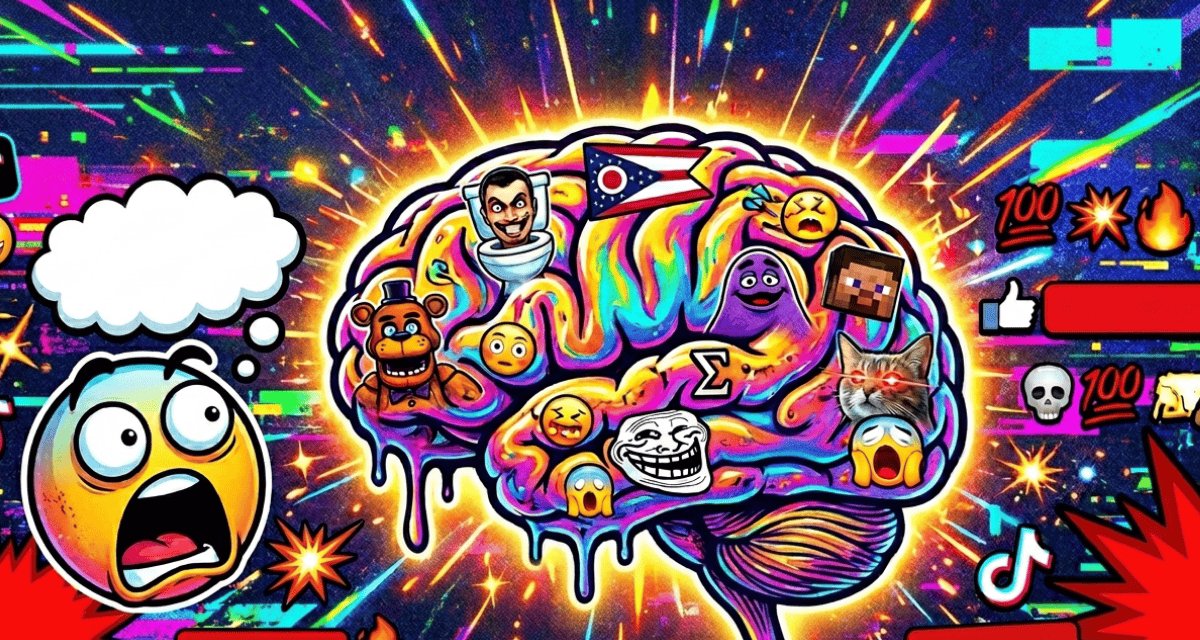
Growing academic evidence links heavy use to depression, anxiety, loneliness, physical complaints, and behavioral manipulation through surveillance-driven and AI-targeting.
Are you or your children/wards enjoying the constant video feeds from various social media apps where every flick of your finger up the screen unveils yet another interesting meme or video that makes you laugh, smirk, frown or simply brush off as clickbait?
Short-form video and social media often feel harmless because each individual clip, post, or scroll is small.
However, the harm, now being validated through formal medical research, builds through repetition: every swipe trains attention, reward, sleep, mood, and self-control in ways that can compound over time (as brain rot).
The point is not that every user is damaged, or that every minute online is toxic. The evidence is more precise than that: heavier and more problematic use is associated with worsening attention span, more stress and anxiety, poorer or less sleep, and a range of downstream mental and physical complaints.
Why video feed hook so hard
Short-form feeds are engineered around novelty, speed, and variable reward. That matters because the brain adapts to repeated patterns: if the next stimulus is always immediate and more entertaining than the last, slower tasks can start to feel unusually effortful.
In a 2025 systematic review and meta-analysis in Psychological Bulletin, 71 studies with 98,299 participants pointed to the trend that short-form video use was associated with poorer cognition overall, with the strongest effects in attention and inhibitory control. The study also found worse mental health, especially stress and anxiety; and the pattern held across youth and adult samples.
A separate 2026 meta-analysis of 58 studies and 96,676 participants has found positive associations with depression, anxiety, stress, loneliness, boredom, and negative affect, while problematic use showed stronger links than routine use.
This is why the “it’s just a few minutes” argument by you or your wards misses the point. The feed is not merely content; it is a training environment for your nervous system, and repeated exposure can shape what your brain expects from ordinary life.
Media addiction and the mind
The clearest psychological damage is not a sudden collapse but a gradual narrowing of mental range. Heavy users often report:
- more distractibility
- more procrastination
- weaker task persistence
- more difficulty staying with reading, work, or conversation that does not deliver instant stimulation
The best-supported mental health harms are anxiety, stress, depressive symptoms, and poorer overall well-being. In the 2024 systematic review and meta-analysis on social media use, problematic use was positively associated with depression, anxiety, and sleep problems, and negatively associated with well-being. In adolescents, a systematic review had found that time spent, repeated checking, personal investment, and addictive or problematic use were prominent risk factors for depression, anxiety, and psychological distress.
The pattern matters because it is cumulative. A person does not need to be “addicted” in a clinical sense to experience harm: persistent overuse can still amplify stress reactivity, reduce tolerance for boredom, and weaken the ability to regulate impulses under pressure.
Furthermore, beyond addiction, social platforms and advertisers can shape what users see, when they see it, and how long they stay, turning the feed into a behavioral-control system built on surveillance, micro-targeting, and engagement optimization — a design that courts are increasingly scrutinizing as potentially harmful and, in some cases, unlawful. Recent lawsuits have shown just how diverse the harms of over-exposure to social media engagement and extended internet/AI dependency can be.
From psychological to physical damage
The physical harms are often indirect, but they are real. The most consistent pathway is sleep disruption: late-night use, bedtime scrolling, and compulsive checking can shorten sleep, delay sleep onset, and worsen sleep quality. In turn, poor sleep worsens concentration, mood, emotional control, and physical recovery, which means the damage can feed back into the next day’s behavior.
There are also more obvious body-level effects from prolonged screen use and sedentary habits. Reviews and meta-analyses have linked heavy use with headaches, eye strain, neck and shoulder pain, and wrist discomfort, especially when screen sessions are long and posture is fixed.
Some studies also connect more intense social media use with lower physical activity, though that relationship is mixed, and depends on the population and how use is measured:
- For the younger social media addicts, the risk is broader because sleep, attention, and habit formation are still under development. In extreme cases, violent repercussions have surfaced.
- For the older users, the problem often shows up differently: bedtime scrolling, fragmented attention, poorer sleep, and reduced cognitive stamina can gradually eat away at work quality, patience, mental balance and emotional resilience.
How to stop the damage
Start by treating social media feeds as an environment issue, not a willpower issue. Then:
- The strongest evidence points to problematic patterns of use, so the first goal is to interrupt compulsive access: remove apps from the phone if needed, turn off the feed’s autoplay feature and non-essential notifications. Put friction between the urge and the swipe.
- Next, protect sleep as if it were part of the intervention, because it is. No scrolling in bed, no “one last check” after lights-out, and no phone on the bedside if you can avoid it.
- Since sleep is repeatedly linked to mental health outcomes, improving it can weaken several harm pathways at once
- Replace the feed with something that restores attention instead of shredding it. Daily blocks of uninterrupted reading, writing, exercise, or other single-task activity help rebuild tolerance for sustained effort, while scheduled rather than continuous use reduces the all-day cognitive drag. The goal is not digital purity: it is to keep the feed from becoming the default setting for every empty moment.
Finally, watch for the warning signs that matter most: sleep slipping, attention narrowing, mood becoming more reactive, and ordinary tasks starting to feel oddly hard without a quick hit of stimulation. Those are often the earliest signs that short-form media is no longer entertainment but a behavioral environment shaping the rest of life.