




Findings upend key scientific assumptions about how galaxies developed in the early phases of the universe.
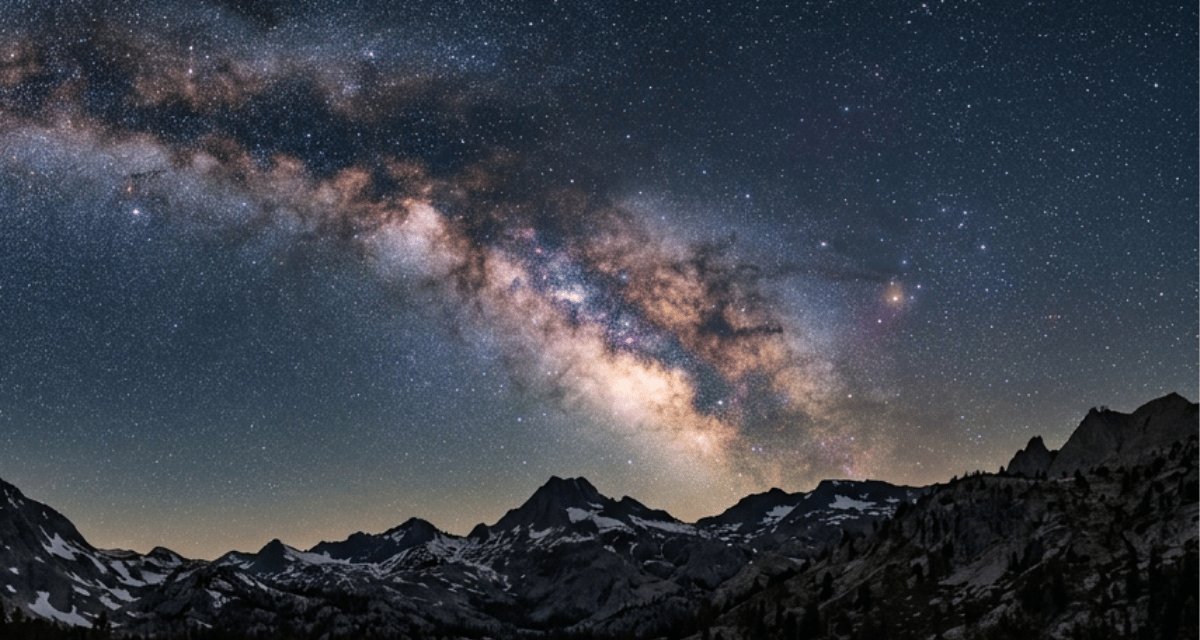
The James Webb Space Telescope (JWST) has found more than one galaxy in the young universe that looks strikingly like the Milky Way, including barred spiral systems seen far earlier than astronomers once thought possible.
These discoveries, submitted in early May 2026, are forcing researchers to rethink how quickly galaxies can organize into stable disks, form central bars, and build the kind of structure seen in our own home galaxy.
Astronomers say the key surprise is not just that these galaxies exist, but that they already show mature features when the universe was still only a fraction of its current age. In one case, the JWST resolved a galaxy that the Hubble telescope had rendered only as a vague smudge into a clearly defined spiral with a stellar bar, revealing detail that was previously hidden from view.
Another study has identified a barred spiral galaxy, CEERS-2112, at a redshift of 3, making it the most distant barred Milky Way-like galaxy seen at the time of its discovery. The findings matter because bars and spiral arms are usually associated with galaxies that have had time to settle and evolve. Their presence in the early universe suggests that galactic growth may have been faster and more orderly than standard models predicted, or that some physical processes important to galaxy formation are still missing from those models.
Researchers involved in the work said the results will require astrophysicists to refine theories of galaxy evolution. JWST’s infrared sensitivity is what makes these observations possible, allowing the telescope to peer through cosmic distance and dust to uncover structures that older instruments could not resolve. In practical terms, the telescope is acting like a time machine: the farther away a galaxy is, the earlier in cosmic history it is being seen.
For astronomers, the broader lesson is that the early universe may have been more capable of producing familiar-looking galaxies than expected. Instead of a chaotic era ruled only by rough, clumpy systems, the data now point to a cosmos that was already assembling elegant, Milky Way-style structures surprisingly early.