



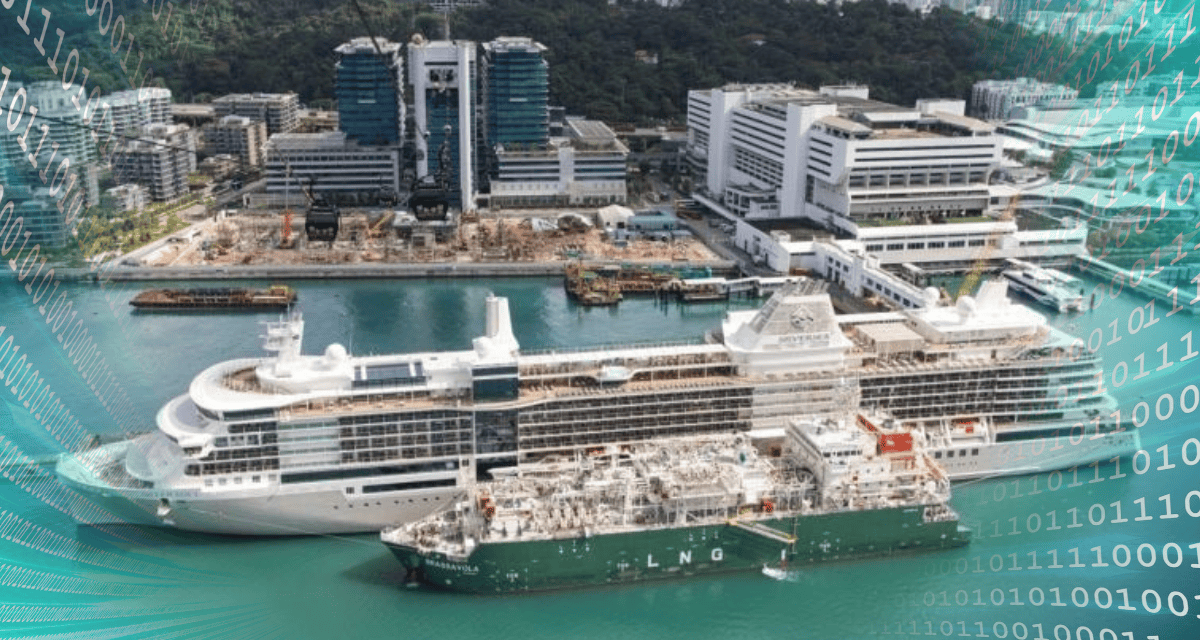
The Singapore Cruise Centre is nearing the end of a five-year digital transformation roadmap, and paving the way for AI-powered resilience.
Faced with rising manpower costs, limited berth capacity, and increasingly complex vessel schedules, the Singapore Cruise Centre (SCCPL) had undergone a five year plan in 2021 to modernize its cruise and ferry terminals.
At the time, SCCPL’s passenger movements, vessel management, and resource planning ran on separate systems with limited data exchange. The resulting silos had made it difficult to respond to real-time events such as sudden passenger surges or vessel delays.
To solve this, the organization introduced an enterprise-wide integration platform anchored by real-time data exchange and event-driven architecture. The approach links scheduling, immigration, resource planning, and terminal management systems into a single operational ecosystem where data is published once and instantly shared across all connected applications.
Key elements of digital transformation
According to the SCCPL’s Vice President, Technology & IT, Lee Siew Kit, the transformation has “allowed us to move from reactive management to anticipatory operations,” improving situational awareness and decision-making across terminals. The digitalization framework includes:
- Continuous event streaming between terminal, vessel, and passenger systems
- Real-time coordination across stakeholders underpinned by event-driven architecture, for operational visibility
- Four-stage data lifecycle covering seasonal, pre-tactical, tactical, and post-tactical phases
- Automated updates to public announcement systems and resource allocation tools
Today, the data-driven real-time approach in all aspects of operations supports more efficient turnarounds, such as redeploying staff and equipment within minutes of a vessel’s arrival, helping ensure that 300-seat ferries can depart within half an hour.
The integration platform also supports data-sharing between maritime and aviation systems, enabling secure transfers of passenger and baggage information for fly-ferry and fly-cruise connections.
Over the longer term, SCCPL will also be on a three stage AI roadmap involving three phases:
- Implementing internal Generative AI to facilitate easy retrieval of operational knowledge to improve organization-wide compliance and execution.
- Tapping predictive and prescriptive analytics with AI to guide pre-emptive action plans to boost business resilience and mitigate operational disruptions
- Developing a fully-integrated digital twin that fuses IT and OT data to provide complete ground situation awareness, support AI-augmented decision-making and automated workflows — to ensure coordinated response across terminals, vessels, and partners
According to Solace, which supplied the event-driven architecture, SCCPL’s adoption of real-time data flow “demonstrates how connected systems can simplify complex operations … and set a foundation for AI-ready environments.”