


Unmanaged AI development could widen gaps in infrastructure, skills, and governance despite potential humanitarian benefits.
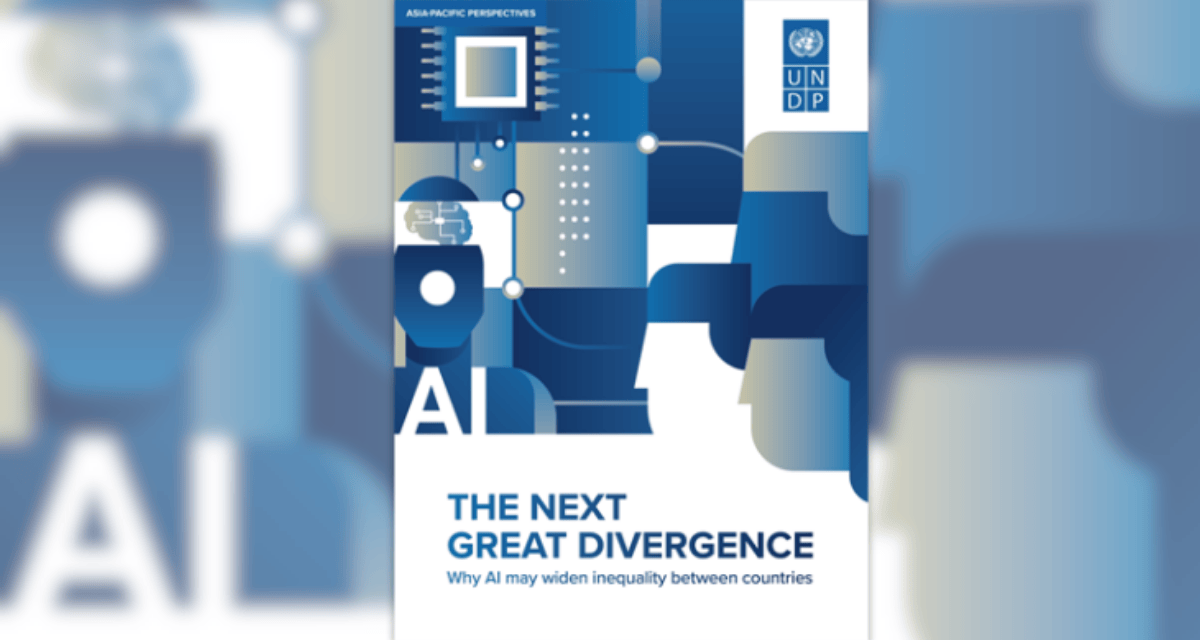
This week, a United Nations Development Programme (UNDP) report is warning that unmanaged AI adoption could reverse decades of progress in narrowing global inequalities, potentially creating “The Next Great Divergence” between rich and poor nations.
According to the authors, countries start from vastly uneven positions in infrastructure, skills, and governance, with AI advancing in months rather than decades, outpacing many nations’ ability to adapt. Without robust policies, this risks widening economic, capability, and institutional gaps after 50 years of convergence.
The report highlights a “central fault line” of capability: nations investing in skills, computing power, and governance will thrive; while others lag, as noted by UNDP chief economist Philip Schellekens.
AI-driven biases exacerbate issues, with algorithms trained on urban male data often misclassifying rural farmers, women entrepreneurs, and indigenous groups as high-risk, blocking financial access. Data suggests that one in four firms polled had anticipated job losses from automation, yet basic digital skills such as using spreadsheets elude one in four urban and most rural residents in some regions.
Nevertheless, positive potentials exist, such as AI aiding disease detection, literacy, food systems, flood forecasting, and public services — but realization demands infrastructure, and regulation many lack. The UN estimates that, by 2027, over 40% of global AI data breaches may involve generative AI misuse, underscoring governance urgency. Examples citing Asia Pacific data show rapid gaps emerging between AI shapers and those shaped by it, per UN Assistant Secretary-General Kanni Wignaraja.
In the conclusion of the report, it is concluded that if access, skills, safeguards, and institutions lag, AI will entrench a “Great Divergence”, leaving under-connected countries and communities stranded in an AI-driven global economy. If governed inclusively, with investments in infrastructure, local-language tools, human oversight, and rights-based rules, AI can expand people’s capabilities, improve public services, and support healthier, more dignified lives in APAC and beyond.