





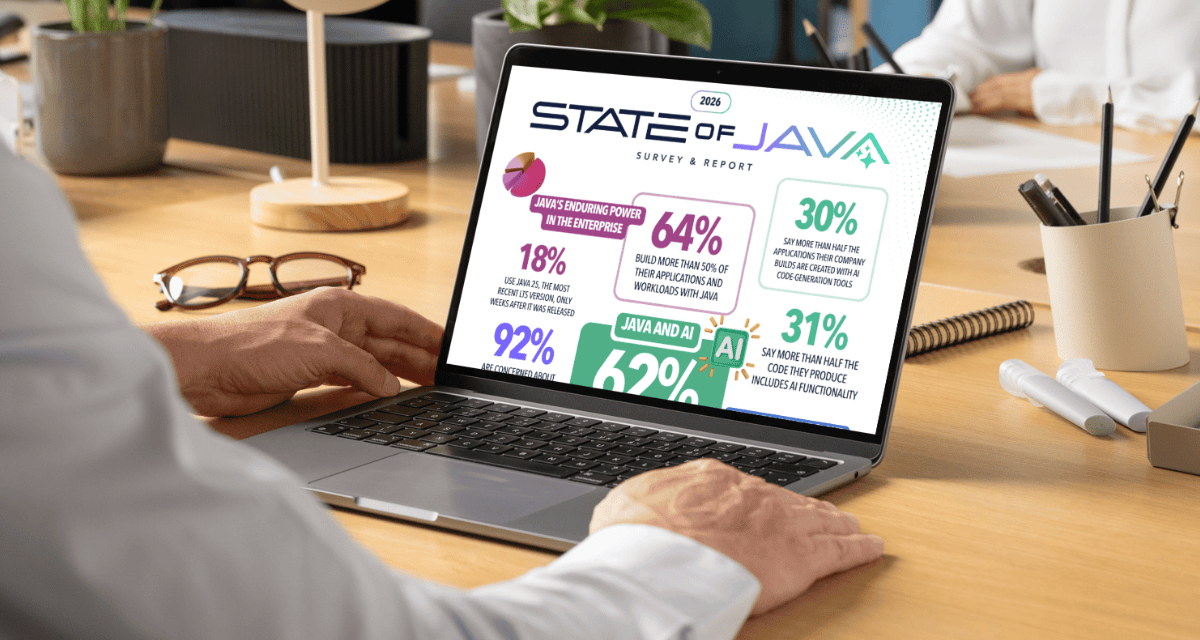
Compare the key findings for Southeast Asia (SEA) versus global findings from Azul’s 2026 State of Java Survey & Report.
97% of Java professionals in SEA are concerned with the cost of Oracle’s Java’s licensing (vs 92% globally) – a rise from last year’s findings of 91% in SEA and 82% worldwide.
As a result, 78% of SEA enterprises have migrated, are migrating, or plan to migrate at least part of their Oracle Java to a non-Oracle OpenJDK alternative distribution, as compared to 81% globally. 60% intend to or have already moved all their Java applications and JVM-based workloads to a non-Oracle alternative distribution.
Top factors for migration in SEA are cost (39% vs 37% globally), uncertainty around ongoing changes (35% vs 29% globally), and Oracle’s cessation of support for Java versions or configurations that the company requires (33% vs 26% globally).
More Southeast Asian organizations responded that Oracle demanded proof of their JVM/JDK inventory (31% vs 25% worldwide). Additionally, 24% in SEA have already been subjected to an Oracle Java audit, in contrast to the global rate of 21%.
More respondents in SEA (69%) have reported using Java to code AI functionality, compared to the global proportion of 62%. These numbers were a jump from last year:
- 56% in SEA and 50% globally.
- 99% of SEA organizations that have already taken measures to address high cloud costs (vs 97% globally) cite utilizing a high-performance Java platform as one of the top five go-to strategies implemented (50% vs 41% worldwide).
- 67% of SEA companies report more than 20% unused compute capacity in their public cloud environments. That is lower than the global proportion of 74%
Check out and compare the above SEA findings against the global findings in the infographic.