

The HR function is transforming alongside AI, and the coming year will be defined by strategic AI adoption to enhance the employee experience and improve productivity.
In 2026, the conversation around AI in HR will finally shift from “What if…?” to “What now?” The rise of AI has pushed HR leaders into the center of enterprise transformation – they are the ones designing the change, upskilling the workforce, and helping organizations hire for the capabilities needed to thrive.
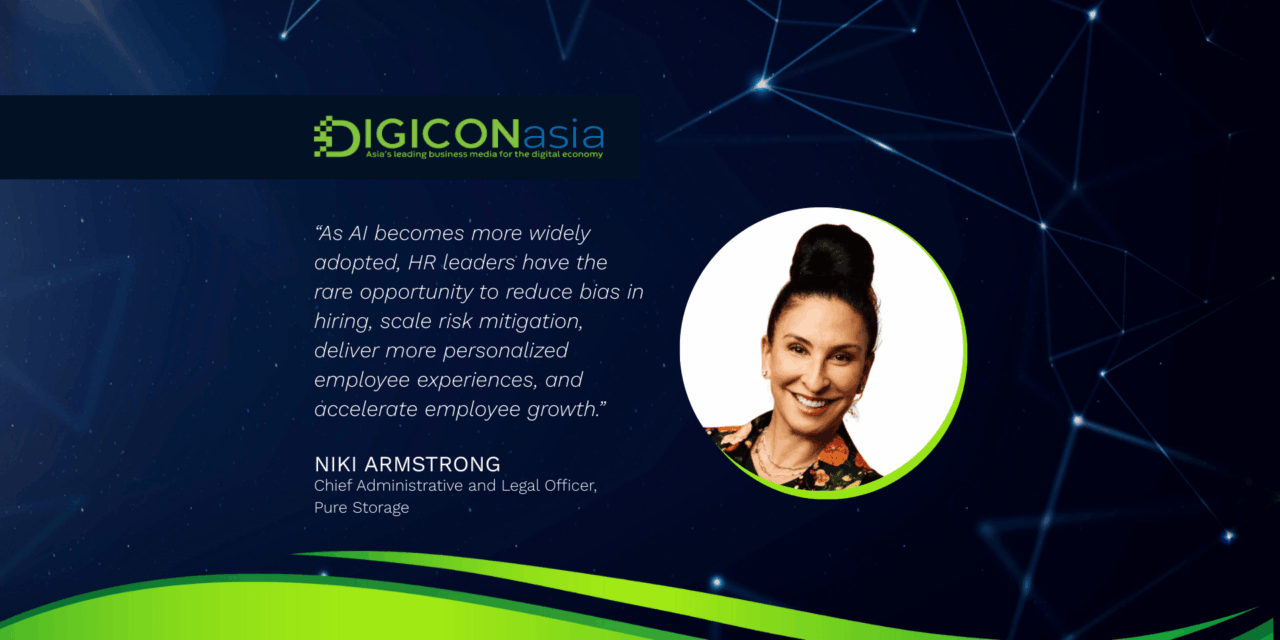
As AI becomes more widely adopted, HR leaders have the rare opportunity to reduce bias in hiring, scale risk mitigation, deliver more personalized employee experiences, and accelerate employee growth.
But the key to success will not be AI alone. It will be the combination of AI plus ethical guardrails, transparency, trust, and privacy protection. Sustainable innovation requires all four.
- The workforce equation will shift from headcount to capability
In 2026, business leaders will move away from obsessing over team size and start optimizing for skills, adaptability, and learning velocity – the speed at which employees can take on and excel at new tasks. Headcount will no longer be a proxy for productivity – capability will be the new currency. Organizations will embed learning directly into business strategy itself, treating curiosity and continuous reinvention as competitive advantages. Those that win will be the ones that nurture “portfolios of reinvention” – employees who constantly upskill and pivot with market needs. We will stop asking “How big is your team?” and start asking “How fast can your team learn?”
- Potential will outweigh pedigree and redefine career progression
Traditional credentials and rigid experience requirements will continue to erode in relevance. Instead, organizations will hire – and promote – based on growth capacity, infinite curiosity, and adaptability. “Portfolio-style” careers, built around reinvention and learning agility, will hold more weight than linear career ladders. Ladders will give way to lattices – dynamic, skill-based pathways that prioritize breadth of knowledge. Career progression will be defined by mobility across teams and functions rather than titles. Microlearning, rapid experimentation, and manager-as-coach models will accelerate this cultural shift. Employees won’t be judged on how long they’ve been in a role but on how boldly they grow into the next one.
- AI will amplify – not replace – people, and AI fluency will become a baseline skill
AI is the dominant trend in all areas of business, including HR, and both employees and employers need to shift how they navigate its use. I see three big trends that will dominate:- In 2026, not knowing how to prompt, validate, or interpret AI outputs will be equivalent to not knowing how to use email. AI fluency will be expected in every role – not mastery, but competence with judgment. As AI tools permeate every role, the ability to think critically about AI-driven insights – rather than simply using them – will define workforce maturity. Learning programs will evolve from “how to use the tool” to critical thinking, interpretation, ethical reasoning, and detecting hallucinations or bias in outputs. The winners will be those who treat AI as a thought partner – not an autopilot.
- While AI will streamline recruiting, compensation analysis, and enhance employee experience, humans will remain essential for interpreting nuance, intent and values. HR functions will evolve toward augmented intelligence – using AI to improve consistency, enhance equity, and foresight rather than replace intuition, all while supporting leaders to make better, faster, and fairer decisions. Here teams should learn to stop aiming for 100% but use AI to support agility and the ability to pivot quickly, adapt and improve.
- To prevent technology from accelerating biases, organizations will adopt an “always-on” approach to AI governance,and ethics will be embedded at the design stage – not retrofitted. Ethical design will be a non-negotiable part of product and people decisions, ensuring fairness, compliance, and transparency from day one. Different regions embed ethics in different ways and AI can be used to great effect to support and accommodate adherence to country specific legislation.
- Performance management will finally modernize
AI will enable real-time coaching signals, turning annual reviews into continuous development conversations. Managers will get nudges, insights, and pattern recognition that help them support employees – not judge them months after the fact. It’s the shift from judgment to growth – and the kind of leadership employees remember long after the review cycle ends. [Or in true Niki style: Annual reviews won’t disappear, but they’ll finally stop behaving like archaeological digs of things we should’ve said months earlier.]