





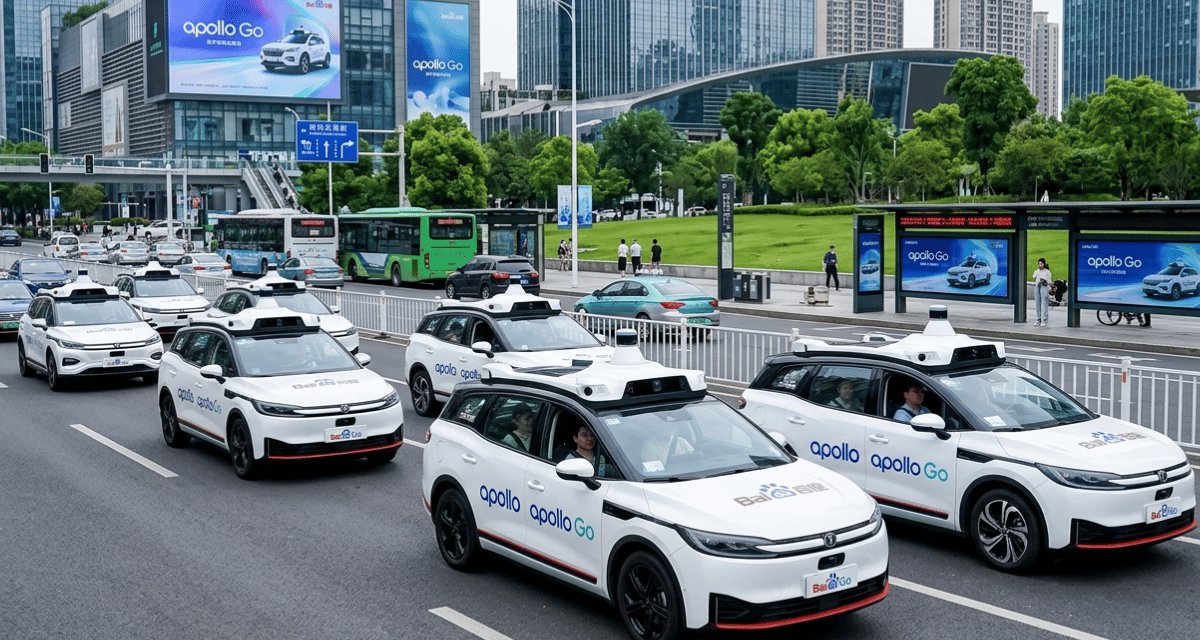
Tightened scrutiny and a moratorium on fleet expansion enforced indefinitely following the city-wide debacle where driverless cars stopped mid-route, endangering lives.
With so much invested in its robotaxi industry, can China’s economy scale safely if a single cloud outage can immobilize vehicles, strand passengers, and trigger a regulatory crackdown?
According to Bloomberg and other reports, China authorities have paused new autonomous-vehicle licenses after a Baidu Apollo Go robotaxi failure in Wuhan raised fresh concerns about safety and oversight.
The move comes after dozens of Baidu’s driverless cars reportedly experienced digital stoppages that caused them to grind to a halt in traffic last month, leaving passengers stranded and disrupting roads in the central Chinese city.
The outage began on 31 March, when multiple vehicles from the firm suddenly lost connection and halted mid-route, including on busy roads and an expressway, according to local reports and video verified by Reuters.
Police said a “system failure” had caused the incident, while Baidu has not publicly explained the root cause. Some riders reportedly stayed in their vehicles for nearly two hours before traffic police and Apollo Go staff helped resolve the situation.
Regulators have since responded by tightening scrutiny of robotaxi pilots and expansion plans. Bloomberg reported that three agencies, including the country’s Ministry of Industry and Information Technology, had held a meeting with city officials overseeing autonomous-driving trials, and urged local governments to review safety procedures and improve monitoring. The suspension means transport firms cannot add vehicles to existing fleets, start new pilot programs, or expand into more cities for now.
The robotaxi failure has also hit the market. Baidu shares have fallen as much as 3.9% in Hong Kong trading after the report, while those of peers Pony.ai and WeRide have also declined.
The episode adds to regulatory pressure on China’s fast-growing robotaxi sector, where operators are still trying to balance rapid deployment with public confidence.
Baidu’s Wuhan robotaxi service remains suspended while local authorities investigate, and the broader licensing freeze has no announced end date.