




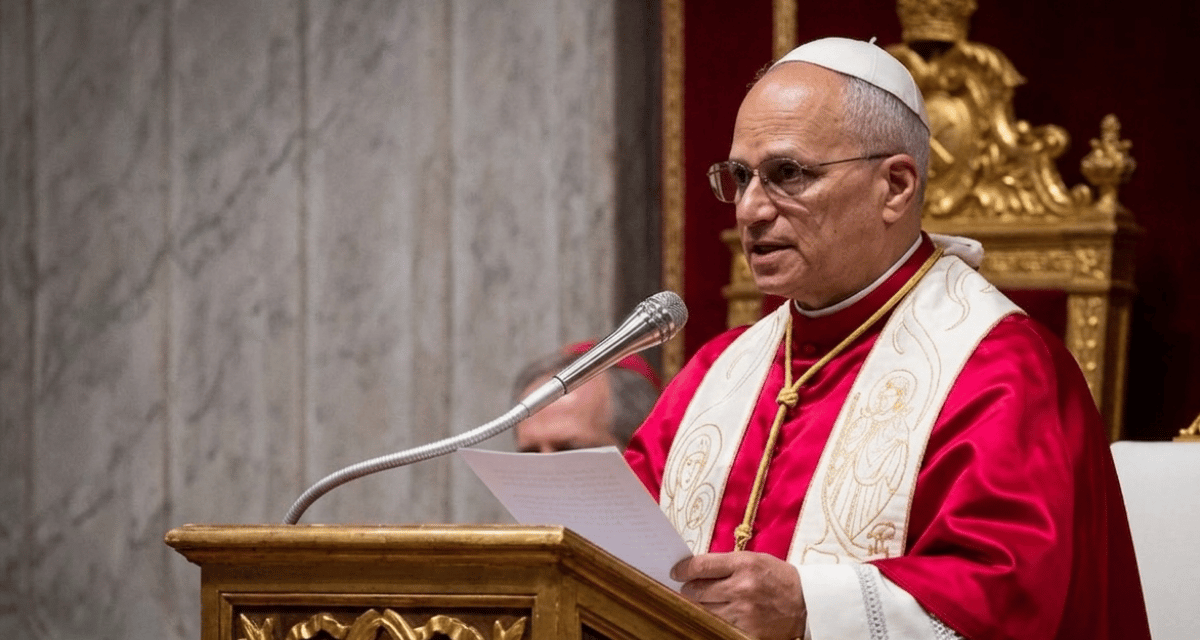
The interdicasterial body unites seven offices to coordinate ethics, governance, and policy to address the multifaceted opportunities and risks of AI.
To coordinate the Catholic Church’s approach to AI, Pope Leo XIV has established a new Vatican-wide body signaling that the rapidly evolving technology will be a central focus of his papacy as he prepares his first major doctrinal document.
The “Interdicasterial Commission on Artificial Intelligence”, created through a papal rescript dated 12 May 2026 and released on 16 May, brings together seven Vatican offices to align policy, ethics, and internal governance around AI.
Participating entities include the Dicasteries for the Doctrine of the Faith, Culture and Education, and Communication, along with three pontifical academies focused on sciences and social sciences. The Dicastery for Promoting Integral Human Development, led by Cardinal Michael Czerny, will oversee the commission’s work in its first year before leadership rotates among members.
AI: an opportunity and a risk
According to the Vatican decree, the initiative responds to the accelerating development and widespread adoption of AI, as well as its potential impact on individuals and society. It emphasizes the Church’s longstanding concern for human dignity and “integral development”, framing AI as both an opportunity and a risk requiring coordinated ethical oversight.
Czerny has described the commission as a “sign of hope” that will help the Vatican and the global Church address AI-related challenges in a structured way. The move comes as Leo XIV prepares his first encyclical, expected to outline a moral framework for artificial intelligence.
Early reporting suggests the document will call for an ethics-driven approach that prioritizes human dignity, labor protections, and peace. The encyclical is reportedly titled “Magna Humanitas” and is expected to draw a historical parallel to Pope Leo XIII’s 1891 encyclical “Rerum Novarum”, which addressed workers’ rights during the industrial revolution. Leo XIV has said he chose his papal name partly in tribute to Leo XIII, signaling continuity with that tradition of social teaching.
Leo XIV has repeatedly addressed AI since his election in May 2025, cautioning young people against overreliance on AI, urging them to retain independent thinking skills. He has also advised clergy not to use generative AI tools to write sermons, and told lawmakers that AI must remain a tool that serves humanity rather than replaces it.