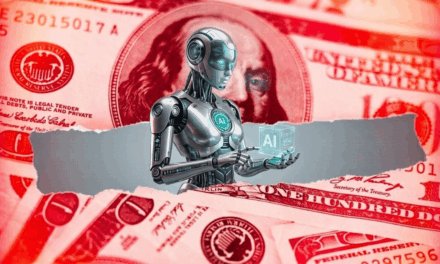

Christine Lagarde links technological breakthroughs, concentrated supply chains and soaring trade barriers with profound uncertainty, economic self-harm and fragile cooperation frameworks.
On 5 March, 2026 European Central Bank President Christine Lagarde delivered a stark warning at an Annual Global Risk Lecture, declaring that the world has shifted from a realm of measurable risks to one of profound uncertainty driven by AI breakthroughs and geopolitical fragmentation.
Lagarde likened the current moment to the 1920s, when innovations such as assembly lines and electrification had spurred US manufacturing productivity, yet global trade had plunged as a share of GDP from 21% in 1913 to 14% by 1929 — amid post-World War I fractures.
Markets had then ignored the interplay, pricing tech gains amid eroding trade ties, which helped transform a 1929 recession into the Great Depression through retaliatory tariffs like Smoot-Hawley. Today, Lagarde argued, AI could boost annual productivity growth by up to 1.5 percentage points — the largest leap since the early 1900s — but severe fragmentation could slash global GDP by 7% over a decade, equivalent to Germany and Japan combined.
Unlike 1920s tech, AI hinges on global integration across three vulnerabilities, Lagarde explained:
- First, its supply chain is hyper-concentrated: China dominates 90% of critical minerals refining; the Netherlands holds a monopoly on key lithography, US firms lead design; and Taiwan manages final fabrication. Self-sufficiency would demand over US$1tn in investments per region and hike prices 35–65%
- Billion-dollar training costs require massive markets; the EU alone represents one-fifth of global AI demand, generating a quarter of top US tech revenues
- Diverse cross-border data fuels superior models; restrictions breed brittle, parochial systems
The ECB leader faulted traditional models calibrated on stable trade and pre-AI eras, urging scenario analysis — as used post-pandemic to forecast inflation accurately — and historical parallels. With G20 trade barriers surging fourfold from late 2024 to 2025, she stressed interdependence makes isolation “economic self-harm” even for powerhouses like the US.
Lagarde advocates “layered cooperation”: reform multilateral bodies such as the WTO, IMF, and World Bank; deepen allied ties on semiconductors via joint procurement and export controls; and pursue minimal rival pacts, including a “basic code of conduct” for AI transparency on risks such as market destabilization or loss of control. She concluded: in uncertainty, preserving ties is vital risk management.