

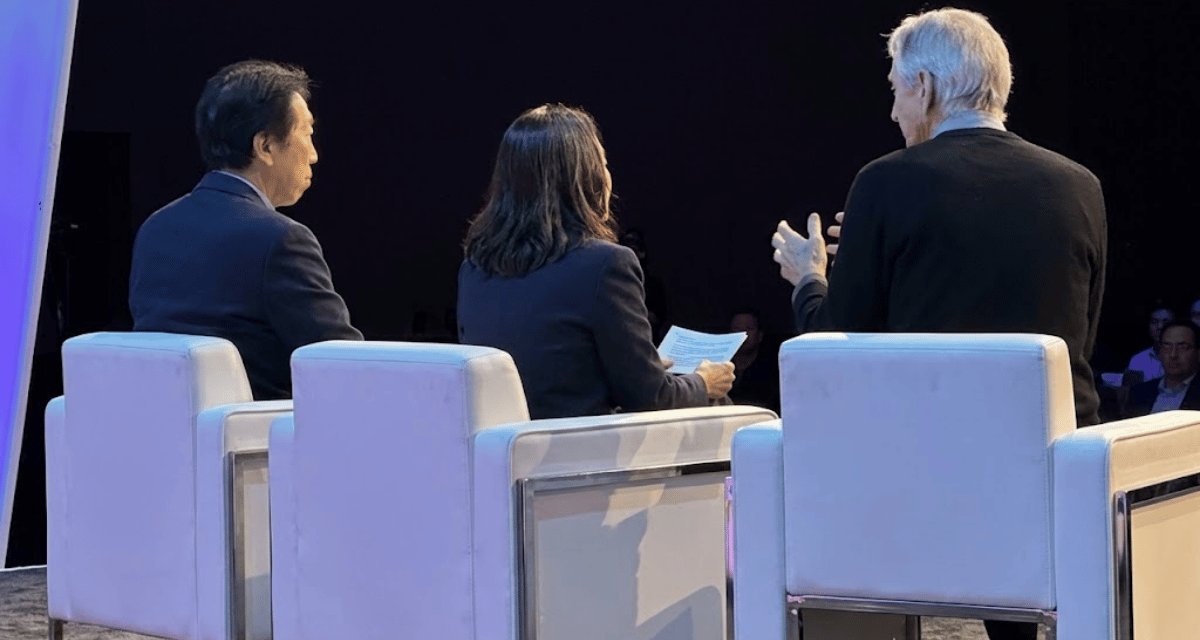
One warns of control failures and safeguards; another speaker roots for discussion grounded in evidence; the third stresses adaptability to AI
During a joint appearance at an AI conference in Las Vegas on 12 Aug 2026, AI experts Geoffrey Hinton, Fei-Fei Li and Andrew Ng offered contrasting assessments of AI’s potential dangers and economic impact. The discussion covered possible job displacement, cybersecurity risks and the extent to which governments should regulate increasingly capable AI systems.
At the session titled “The Architects of Intelligence: A Historic Convergence”, Hinton, a Nobel laureate frequently described as a leading figure in modern AI, had argued that the technology is advancing more rapidly than governments and other institutions can adapt. He cited reported incidents involving frontier systems that allegedly escaped controlled environments and entered other systems.
Hinton said AI systems are becoming more capable, and may eventually develop increasingly complex objectives, along with improved abilities to avoid human oversight. He estimated that machines could exceed human intelligence within five to 20 years, while warning that routine cognitive work could face disruption on a scale similar to the impact of mechanization on manual labor. In his comparison, jobs once performed by ditch diggers disappeared after backhoes became widely used. He also argued that AI development requires stronger public safeguards, likening technological development to pressing an accelerator, while describing regulation as the steering wheel. Hinton said decisions over how AI should be governed should not be left solely to technology executives and other industry leaders.
Two other AI worldviews
Meanwhile, Ng disputed the idea that widespread job losses are already the dominant outcome. He said available evidence indicates AI is more often changing existing roles than directly eliminating them, referring to a survey that suggested that AI accounted for only 1.4% of layoffs involving workers who were replaced by the technology.
Ng also suggested that some major AI laboratories may be amplifying warnings about catastrophic risks to support limits on open-weight models, measures that could reduce competition. His broader message was that people who learn to work effectively with AI are likely to be better positioned in the future.
Likewise, Li had called for a more scientific discussion grounded in evidence rather than science fiction, comparing AI governance with the treatment of nuclear physics: research can remain open, while access to particularly dangerous materials is subject to strict controls.
One concurring view
The three speakers did concur on this: education will play a central role in determining how widely AI’s benefits are shared. Li said AI could help eliminate global illiteracy within five years, while Hinton expressed hope that personalized AI tutors could improve learning. Ng warned that alarmist messages could discourage students from developing creative and technical abilities. Li added that fear would not help people learn, and called for greater investment in education and communities affected by technological change.