



How to achieve a more integrated and automated approach to managing increasingly complex simulations, while putting validation firmly in the hands of human experts.
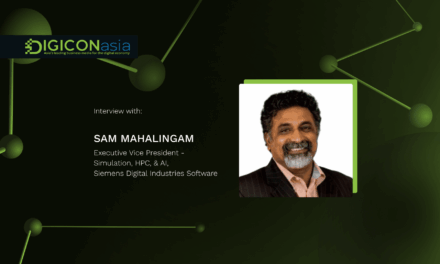
In an interview at Realize LIVE Asia Pacific 2026, Sam Mahalingam, Executive Vice President – Simulation, HPC, & AI, Siemens Digital Industries Software, discussed how Siemens combines simulation, high-performance computing (HPC), cloud resources and artificial intelligence (AI) to advance its digital-twin strategy.
He explained how these technologies help engineers run complex physics-based analyses more efficiently, scale computing capacity without managing added infrastructure, and apply expert knowledge to AI-assisted workflows — while emphasizing the continued importance of human validation in regulated and safety-critical industries.
Here, we present his insights in a Q&A format:
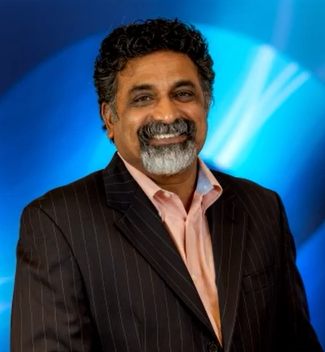
Sam Mahalingam, Executive Vice President – Simulation, HPC, & AI, Siemens Digital Industries Software
HPC can require substantial resources. Has using it for simulation posed a challenge for customers?
Sam: We recognised that HPC is critical to physics-based simulation. Validating a design by solving physics-based equations requires substantial computing power.
Simulation tools also help create 3D digital twins, making them an integral part of a comprehensive digital-twin strategy.
We use HPC and simulation internally and provide them to customers as well. Siemens invested in HPC in 2002 because physics-based simulations demand significant computing power, especially when users need results quickly.
About 15 years ago, a full-vehicle crash simulation required 1,024 relatively slow CPU cores and took roughly 24 hours to complete. Another challenge was ensuring that owned, on-premises computing capacity remained fully utilised.
Why did customers start looking beyond their own data centers? How does Siemens help customers access cloud resources?
Sam: We first introduced tools to run simulations on a desktop without HPC. For more demanding physics-based solvers, customers could use HPC resources in their own data centers.
Simulation tools also help create 3D digital twins, making them an integral part of a comprehensive digital-twin strategy.
We use HPC and simulation internally and provide them to customers as well. Siemens invested in HPC in 2002 because physics-based simulations demand significant computing power, especially when users need results quickly.
About 15 years ago, a full-vehicle crash simulation required 1,024 relatively slow CPU cores and took roughly 24 hours to complete. Another challenge was ensuring that owned, on-premises computing capacity remained fully utilised.
Why did customers start looking beyond their own data centers? How does Siemens help customers access cloud resources?
Sam: We first introduced tools to run simulations on a desktop without HPC. For more demanding physics-based solvers, customers could use HPC resources in their own data centers.
As simulation use expanded, companies ran more virtual tests and needed additional computing capacity for new designs. Because many could not justify the required capital investment, they turned to the cloud.
We connect customers to the cloud when they need extra capacity for tasks such as full-vehicle validation. They can use those resources without managing the underlying cloud complexity, while maintaining security and governance.
We enhance the underlying technology behind the scenes, so customers do not have to manage its complexity.
With HPC workload-management and scheduling tools, how does AI determine the most effective way to run an HPC job?
Sam: Workload management takes an engineer’s job, divides it across distributed computing resources, then recombines the outputs and returns the final result. We also provide scheduling software
Our HPC platform now uses AI. When a user uploads a 3D model with its boundary conditions, load cases, and materials, the system analyzes the inputs and says: “I know how to run this job in the most efficient fashion in order to give you the result in the shortest possible way.”
How was the meshing agent improved?
Sam: Initially, we get suboptimal meshes. Capturing engineers’ expertise to make corrections and integrating them into the agent’s learning process, we built skills and used them to pre-train the agent.
The resulting mesh reflected that knowledge and came closer to human standards, showing how human expertise can improve AI while AI helps people make faster decisions. We see 10x to 50x boost in productivity because of agents.
What role will human experts play as AI agents advance?
Sam: I believe the shift to agentic automation will be highly disruptive, which understandably concerns some people. Human experts will still be essential for validation, particularly in regulated and safety-critical industries.
A key takeaway from this conversation is how simulation, HPC, cloud resources, and AI agents are being combined in digital-twin workflows. These technologies can support complex analyses, provide additional computing capacity, and apply engineering knowledge to tasks such as workload scheduling and meshing. Together, they point to a more integrated and automated approach to managing increasingly complex engineering workflows, while putting validation firmly in the hands of human experts.