


When trust and resilience become a competitive differentiator, sovereign AI plays a critical role.
However, IDC predicts that by 2028, 60% of multinational firms will split AI stacks across sovereign zones, tripling integration costs as regulatory fragmentation and supply chain risks slow strategic scaling.
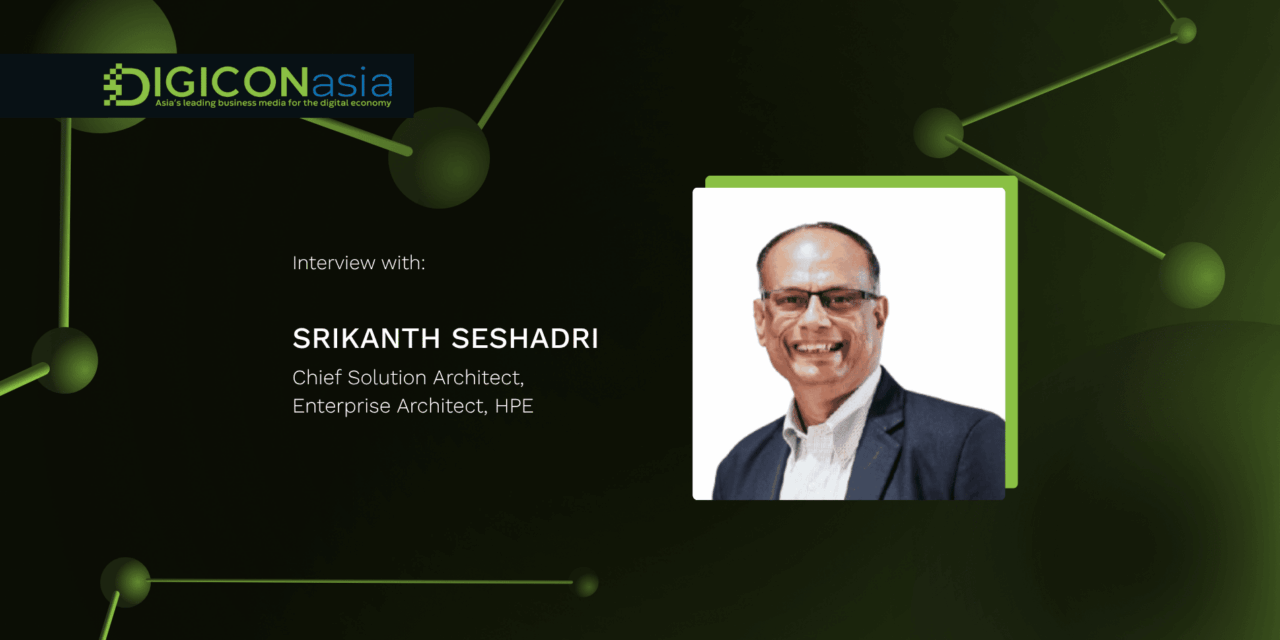
In 2026 and beyond, CIOs are starting to see sovereignty in a new light: as a strategic lever for trust, resilience, and competitive advantage. We discussed this shift with Srikanth Seshadri, Chief Solution Architect, Enterprise Architect, HPE.

Srikanth Seshadri, Chief Solution Architect, Enterprise Architect, HPE.
Why has sovereign AI evolved from a regulatory mandate to a competitive differentiator?
Srikanth: Sovereign AI began as a narrow compliance response to data residency requirements, but has since evolved into a broader strategic imperative. It evolved from a checkbox into a competitive advantage as organizations realized that greater control over how AI systems are built, deployed, governed, and operated enables alignment with local laws, security needs, and policy requirements.
Organizations are moving beyond public cloud to dedicated, air-gapped infrastructure aligned with regulatory and competitive needs, ensuring sensitive data and models remain under full control. Across the Asia-Pacific, growing investment in sovereign AI infrastructure signals a shift from seeing sovereignty as a constraint to recognizing it as a foundation for confident AI scaling.
Sovereignty becomes a capability multiplier when organizations own the full AI lifecycle, from local data training to in-jurisdiction deployment, independent operation, and compliance governance. Unlike public cloud, where control is limited, full lifecycle ownership enables faster iteration and scaling without reliance on external providers. This agility removes bottlenecks and turns regulatory requirements into lasting competitive advantage.
How will the ongoing memory chip shortage make sovereign AI more urgent than ever?
Srikanth: Across the Asia-Pacific, enterprises are not waiting for the memory shortage to be resolved – they are adapting to it.
DRAM and NAND costs are expected to remain elevated well into 2027, and server orders are now being repriced right up until shipment. Yet demand is not pulling back – organizations are prioritizing speed to secure AI capacity above all else, and the urgency is only accelerating.
The instinct might be to see this as a sovereign AI obstacle. In practice, it is the opposite. Organizations with dedicated local infrastructure control how memory-intensive workloads are prioritized and scaled, and next-generation architectures are compounding that advantage, delivering double the GPU density per rack and significantly more throughput per dollar. The memory shortage makes shared public cloud a less predictable bet, not a safer one.
For organizations in financial services, healthcare, and public infrastructure, where procurement delays can disrupt critical programmes, this control is essential. As sovereign AI becomes more distributed, inference is moving closer to where data and users reside, easing pressure on central infrastructure while keeping workloads within jurisdictional boundaries.
Organizations that own their AI stack, from data center to edge, are better positioned to withstand supply volatility than those reliant on external providers. In this context, sovereignty is not just governance – it is a supply chain strategy.
The ongoing memory chip shortage significantly heightens the urgency of developing sovereign AI. Memory chips are vital for AI infrastructure, enabling data processing and storage for advanced models. As AI becomes integral to critical sectors like security, healthcare, and finance, reliance on foreign chip suppliers exposes nations to geopolitical risks, supply disruptions, and security vulnerabilities.
The shortage underscores the need for sovereign AI—developing, deploying, and maintaining AI systems within national borders using domestically produced or trusted hardware. This approach ensures data sovereignty, enhances resilience, and reduces dependency on external supply chains that could be compromised.
Moreover, the crisis accelerates the push for local semiconductor manufacturing. Building domestic capabilities not only secures hardware supply but also fosters innovation, economic growth, and technological independence. It allows nations to embed security measures directly into hardware, protecting sensitive information.