


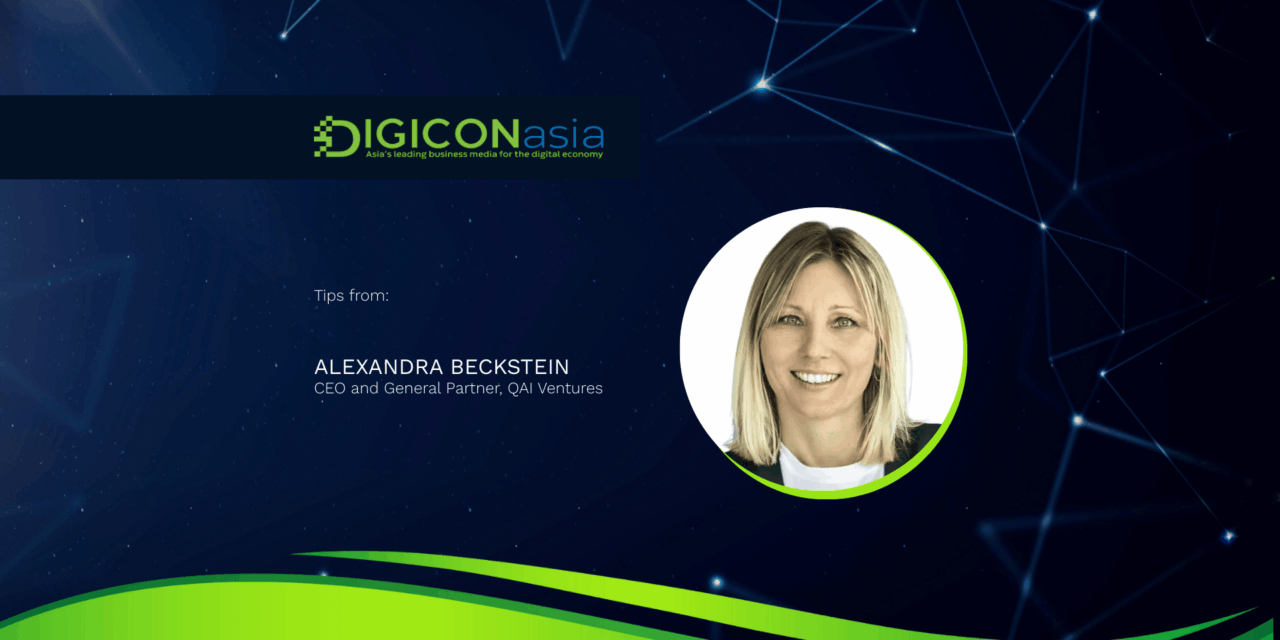
Here are some reminders and strategies for C-level executives to ramp up quantum readiness not individually, but as a region.
Quantum computing represents both the greatest threat and opportunity facing global finance in decades. However, the very technologies driving financial dominance could become the industry’s greatest vulnerability.
Asia stands at the forefront of a global digital finance revolution. Yet, the digital trust that underpins the entire modern economy rests on a foundation of classical encryption — an assumption that is being fundamentally challenged.
Sophisticated, state-level agencies and cyber espionage groups are already “harvesting encrypted now, decrypting later” when quantum computing is accessible. This means that they are already stealing and stockpiling massive amounts of encrypted data. Every piece of data stolen today is a vulnerability when quantum goes ubiquitous.
Asia’s uneven quantum-readiness landscape
In the race for quantum leadership, countries like Japan, South Korea, and China are investing billions, but the ecosystem connecting research, industry, and startups is still emerging at different paces.
Amid ASEAN states, we can see increasing mobilization towards collaborative quantum capacity building, with collaborative approaches around industry-, talent-, and use case development across the region.
However, awareness of the quantum shift remains nascent regionally. This creates a potential weak link because an attack on one jurisdiction could easily cascade, destabilizing trust in the entire regional financial network.
Transitioning to Quantum in Asia
Securing the financial future requires a two-pronged strategy. This is not a single “big-bang switchover” but a phased, deliberate migration, starting with an immediate software defense and moving toward a long-term hardware solution.
- The first line of defense is a software-based approach known as “Post Quantum Cryptography”. This involves new algorithms designed to be difficult to break for both quantum and classical computers. As a software-based solution, this is what institutions must begin implementing now to protect their data. It is a viable and necessary first step, but it is not unbreakable, and is best seen as a temporary solution.
- The second, long-term standard is a hardware-based security solution, “Quantum Key Distribution”, which uses the fundamental laws of physics to secure the transfer of data. This approach allows a secret code to be sent, but the breakthrough is that the very act of a hacker observing the information would alter it, instantly detecting the breach.
This method relies on unbreakable physics. While still costly to implement today, this is the technology expected to become the long-term standard for securing our most critical digital infrastructure.
Preparing for Q-Day
The quantum transition requires involvement beyond IT departments, and should be addressed at senior leadership levels. The risk is strategic, financial, and reputational: therefore, waiting for a perfect, off-the-shelf solution is not a strategy, it is a liability.
This transition demands a new level of ecosystem-wide collaboration, involving a concerted regional effort that unites industry leaders, researchers, agile startups, and forward-thinking governments.
Financial institutions in Asia that engage now are building a profound competitive advantage. They understand this is not just a defensive cost, as the same hybrid quantum systems are already being used today to tackle complex problems in portfolio optimization, logistics, drug discovery, and risk management.
By working together, Asia can tap a regional quantum readiness movement to unlock the full potential of technology and shape a secure, intelligent, and globally connected future.