




As businesses push ahead in the AI race amid ongoing productivity pressures, a key question is emerging: are these investments delivering meaningful returns, or adding cost and complexity without clear impact?
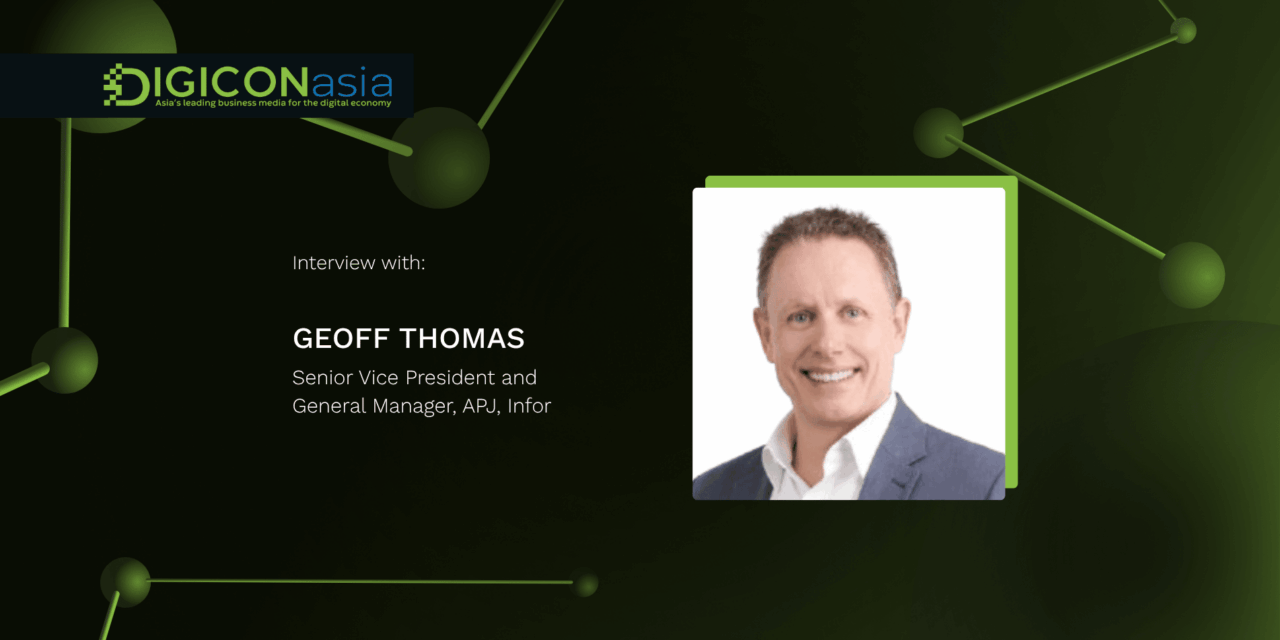
In this exchange, Geoff Thomas, Senior Vice President and General Manager, APJ, Infor, offers a perspective on where AI is driving measurable business impact across the region, and where expectations may be outpacing reality.
For many organisations in APACAI has shifted from isolated pilots into day-to-day workflows. What does this shift mean for productivity and business performance?
Thomas: Organisations are placing greater emphasis on creating measurable business value from AI initiatives. The conversation is increasingly shifting from what AI can do to whether it is actually changing how work gets done.

Geoff Thomas, Senior Vice President and General Manager, APJ, Infor
The organisations deriving the most value from AI are not treating it as a standalone tool. Rather, they are embedding it into the flow of operations, where it can remove friction, speed up decisions, improve forecasting and take pressure off teams that spend too much time on repetitive coordination.
This only works when AI is grounded in clean, connected, and well-governed operational data. When organisations have a shared operational truth, AI can operate with greater accuracy, speed, and business relevance. This enables faster decisions, improved productivity, and greater operational agility.
A lot of emphasis today is on ‘human in the loop’ and ‘human over the loop’. Does this mean the near-term reality is “supervised automation”, rather than fully autonomous operations?
Thomas: Most enterprises are not ready to hand over full autonomy, and that is probably the right place to be for now. In the near term, the model is supervised automation: AI taking on routine activities, analysing large volumes of operational data and carrying decisions through connected workflows, while people stay in control of sensitive, high-impact or policy-driven decisions.
This is especially important in industries where compliance, operational continuity, and risk management are critical. Effective AI systems need transparency, observability, and governance built in from the start. Organisations want to understand why an agent acted, what data it used, which policies were applied, and whether the action stayed within defined constraints.
The real opportunity is to use AI to extend what people can do, not replace them from the process altogether. That means giving teams better tools to work faster, identify issues earlier and make more informed decisions, while keeping people focused on exceptions, judgement calls and governance.
As organisations become more comfortable with agentic AI and governance frameworks continue to mature, autonomy will increase, but human oversight will remain a critical part of enterprise AI adoption.
What have you observed among organisations in APJ when it comes to balancing localisation (e.g. regulatory, language and market differences) with a unified data backbone?
Thomas: Across APJ, many organisations are balancing the need to address local regulatory, data residency, and market requirements with the need for enterprise-wide visibility and consistency. This is particularly challenging in a region where businesses often operate across diverse markets, complex supply chains and varying levels of digital maturity.
Organisations increasingly recognise that localisation does not require fragmentation. The goal is to maintain local flexibility while operating from a common data environment that supports enterprise-wide visibility, governance, and interoperability.
This becomes even more important as organisations look to scale AI and automation across functions and geographies. AI is only as effective as the data and operational context behind it. If the underlying environment is fragmented, it becomes much harder to generate consistent and reliable outcomes.
This is also where industry-specific AI becomes critical. Organisations want more than a shared data foundation; they want AI that understands the realities of their industry, from workflows and compliance requirements to the operational decisions that shape performance. For example, in retail, it could be helping teams respond faster to demand shifts; and in food and beverage, it may support labelling and forecasting across complex supply chains.
That is what makes the output more relevant, more trusted and ultimately more actionable.
How can AI be used to strengthen resilience in a volatile operating environment, and why is ecosystem orchestration across platforms, partners and service providers becoming critical to execution in the region?
Thomas: Resilience today is increasingly shaped by how quickly organisations can detect change, make decisions, and execute a coordinated response. This is where AI can make a practical difference. It can help businesses connect signals across supply chains, production, logistics and customer operations, so issues are identified earlier and decisions are made with better context. Combined with process mining and workflow automation, AI can help organisations respond more effectively to supply chain disruptions, changing customer demand, and geopolitical uncertainty.
The greatest value comes when AI is embedded within operational workflows, allowing organizations not only to identify issues but also to coordinate actions across teams, systems, and partners.
At the same time, execution increasingly depends on the ability to coordinate actions across platforms, partners, and service providers. Most organizations operate in complex ecosystems, where disconnected systems and fragmented data can slow decision-making and execution.
This is especially true in APJ, where businesses often operate across borders and complex supply networks. The organizations that are strongest in this environment are the ones that can orchestrate data, processes and partnerships across the broader ecosystem, rather than trying to manage everything in isolation.
The real advantage, then, is not just having AI in the business. It is having the connectivity and operational alignment to act on what AI reveals.