

As organisations rush to modernize in the face of an AI onslaught, they face an uncomfortable truth: they are marching into an operational minefield.
APAC enterprises are currently caught in a modernisation dilemma.
On one side, boards are pressuring CIOs to deploy Agentic AI and unlock new operational efficiencies. On the other, the restructuring of the virtualization industry (marked by subscription-only shifts, rigid license bundling, and pricing volatility following VMware’s acquisition by Broadcom) has turned historically stable infrastructure into an immediate board-level risk.
To survive both pressures, enterprises are being forced to move. Market data from Gartner reveals the scale of this shift, projecting that 35% of VMware workloads will migrate to alternative platforms by 2028. According to Gartner, 83% of data migration projects either fail outright, exceed their budgets, or take longer than planned.
A decade ago, a failed migration meant a delayed timeline and an IT budget write-off. Today, with compressed timelines and razor-thin operational margins, a modernisation failure is no longer just expensive, it is existential.
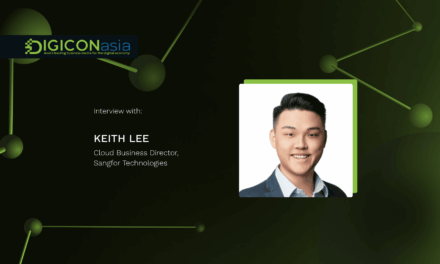
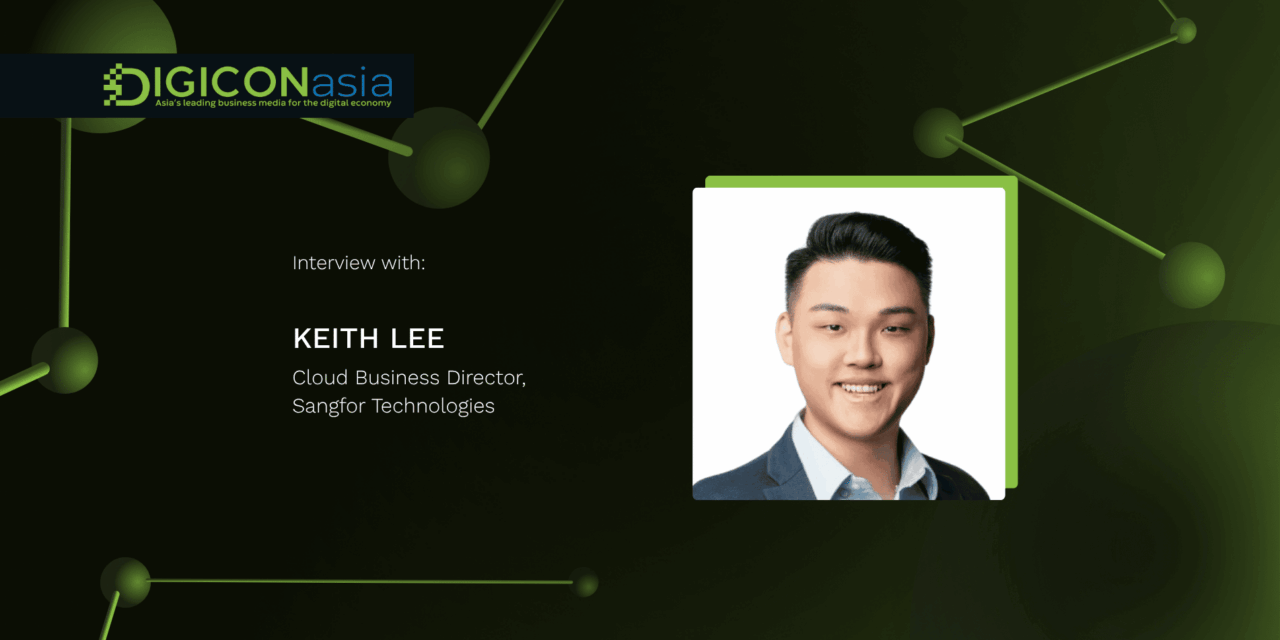
We discussed the migration minefields and modernisation meltdown with Keith Lee, Cloud Business Director, Sangfor Technologies.

Keith Lee, Cloud Business Director, Sangfor Technologies.
Gartner projected that 35% of VMware workloads will migrate to alternative platforms by 2028, but 83% of data migration projects would either fail outright, exceed their budgets, or take longer than planned. Why has migration become the biggest bottleneck and where most enterprises underestimate complexity?
Lee: As organisations evaluate VMware alternatives due to rising structural and financial shifts, many discover that server virtualization migration is more than a technology replacement project. The main challenge lies in the hidden dependencies built up over years across compute, storage, networking and security.
Teams often underestimate the amount of discovery required before the migration begins. Undocumented configurations, application dependencies and security policies only become visible once projects are underway, creating delays and additional work.
The transition phase is another common blind spot. Running parallel environments, rebuilding configurations and coordinating cutovers can quickly drive up costs and extend timelines. That’s why automated risk assessment and planning are becoming critical to reducing risk even before migration starts. To solve this, advanced framework capabilities like the automated discovery and seamless workload mapping tools provided in a dedicated VMware alternative solution, help reduce the period in which organisations are forced to run and pay for parallel environments.
What are some key operational and business risks for APAC enterprises emerging from legacy infrastructure, fragmented hybrid environments, and rising cost volatility?
Lee: Across the industry and from what we see here at Sangfor Technologies working with over 12,000 organisations [KL1.1][BJ1.2]migrating from platforms like VMware, the risks tend to show up in a few key areas.
Cost is becoming harder to predict as organisations manage increasingly complex hybrid environments and changing licensing models. This is one reason many organisations are exploring hyperconverged infrastructure (HCI), which can simplify operations and reduce management overhead.
Downtime is another concern. As environments become more interconnected, even small disruptions can impact business operations. A New Relic Study reveals that businesses face an annual median cost of $76 million from high-impact IT outages.
Fragmented environments also make it harder to maintain consistent security policies and visibility. At the same time, organisations are facing a growing skills challenge, as managing multiple platforms requires increasingly specialized expertise. Choosing a platform that flattens this learning curve by mirroring familiar architecture routines allows existing IT teams to maintain operational velocity without exhausting re-skilling cycles.
The organisations navigating these risks most successfully are those that prioritize visibility, automation and phased modernisation over large-scale, high-risk migrations.
How are AI ambitions colliding with infrastructure reality, and why are many environments not yet ready to support scalable AI workloads?
Lee: Many organizations are discovering that infrastructure built for traditional applications isn’t necessarily ready for AI. IDC research found that 43% of firms in Asia Pacific cannot develop new applications without significant upgrades to existing systems.
Traditional environments were designed for predictable workloads. AI requires something very different: high volumes of data, dynamic resource allocation and fast access to compute and memory.
The challenge is that many environments have evolved into fragmented collections of systems, making it difficult to move data efficiently and scale new workloads. As a result, AI ambitions are accelerating faster than infrastructure readiness.
What are some best practices for an AI modernisation strategy today?
Lee: A successful AI modernisation strategy should focus on three areas:
- First, build an integrated foundation: AI workloads require compute, storage, networking, security, and management to work together. An integrated platform such as HCI or private cloud can reduce complexity and improve performance.
- Second, modernize in phases: Most organizations cannot replace everything at once. A phased approach helps protect existing investments, reduce migration risk, and introduce AI capabilities based on business priorities.
- Third, place each workload in the right environment: Public cloud may be suitable for experimentation and flexible demand, while private cloud offers stronger control, data sovereignty, and predictable performance. The key is to manage both environments consistently.
Organisations should also improve infrastructure efficiency. At Sangfor Technologies, innovations such as Memory Tiering combine physical DRAM with high-performance NVMe storage to expand usable memory capacity and reduce the need for immediate hardware upgrades.
Ultimately, AI modernisation is not only about adding GPUs. It is about creating a simpler, more flexible, secure, and efficient infrastructure foundation.