





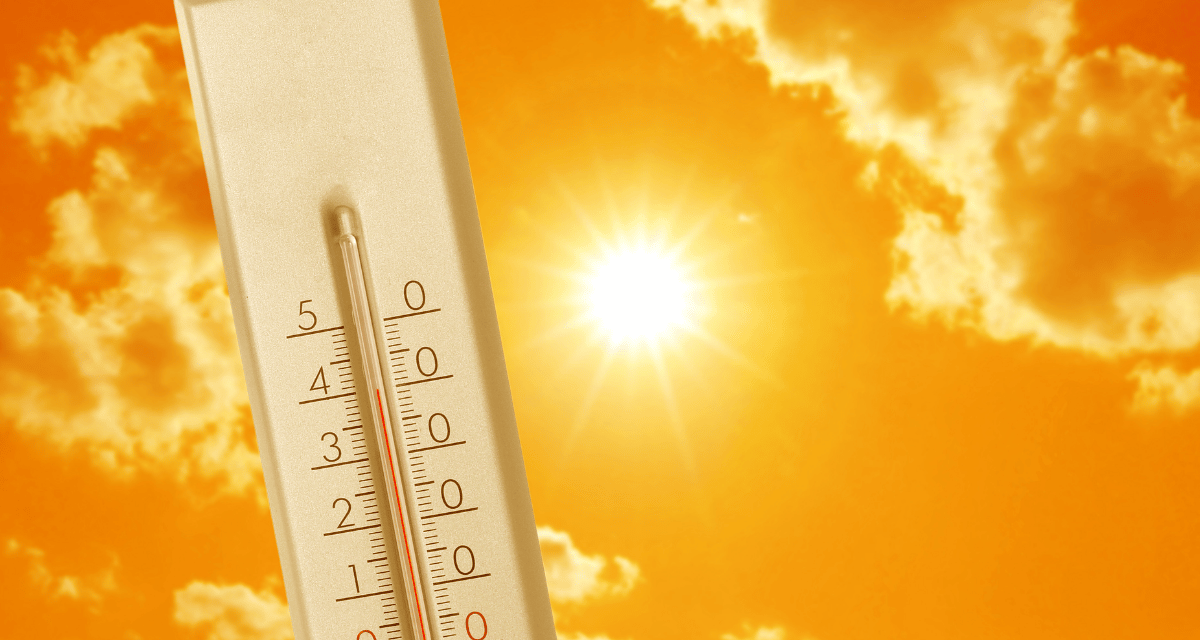
Temperatures have risen nearly 3.5 degrees Fahrenheit, while 90-degree days may triple by 2050, straining health services and infrastructure
According to a news report, the state of Massachusetts in America is facing a hotter climate, with rising temperatures expected to increase both the frequency and severity of extreme-heat events in the coming decades.
Since the start of the 20th century, the state has already warmed by nearly 3.5 degrees Fahrenheit (1.9 degrees Celsius), underscoring a long-term shift that is raising public-health and infrastructure concerns, according to the Boston Globe report on 13 August 2026.
According to projections cited in the report the number of days reaching 90 degrees Fahrenheit (32.2 degrees Celsius) could be two to three times higher by 2050 than the historical average. Such conditions can pose disproportionate risks for older people, children, outdoor workers, people with underlying health conditions, and residents without reliable access to cooling.
State Public Health Commissioner Dr Robert Goldstein has described extreme heat as a predictable public-health threat, arguing that its foreseeable nature allows authorities and communities to take preventive action before people become ill. Effective preparation can include public warnings, cooling access, outreach to higher-risk residents, and coordination among public-health, emergency-management, and local government agencies.
The projected increase in very hot days illustrates how climate change can alter daily living conditions beyond individual heat waves. More frequent periods of 90-degree F (32.2-degree C) weather can strain electricity systems, increase cooling costs, worsen urban heat exposure, and place greater pressure on health services.
As temperatures continue to rise, planning for extreme heat is likely to become a more prominent component of Massachusetts’ broader climate-adaptation and public-health response. This has led to the creation of an official Heat Resilience Officer role: a statewide post dedicated to preparing for the growing dangers posed by extreme heat. Rather than treating extreme heat as an isolated weather event, the state initiative is intended to build a more systematic response that anticipates periods of high temperatures, coordinates agencies before and during heat waves, and directs protection toward populations that may be least able to avoid or manage dangerous heat exposure.