


How AI is transforming logistics and supply chains, breaking down siloes and catalyzing future trends for the industry.
At Siemens Realize Live APAC 2026, my discussion with Volker Albrecht, CEO, Siemens Digital Logistics, centered on how AI is reshaping logistics and supply chains, why integration matters more than isolated point solutions, and what it takes to build industry-grade, trustworthy agentic AI in the logistics sector.
Albrecht: At Siemens, when we talk about logistics, we always talk about the integrated chain. We don’t see logistics as separate from our other offerings – it’s part of the overall operations.
You might have the best-operating factory, but if you don’t have your supplies, you can’t produce. And the reverse is also true: if you don’t have your logistics under control, you can’t produce efficiently.
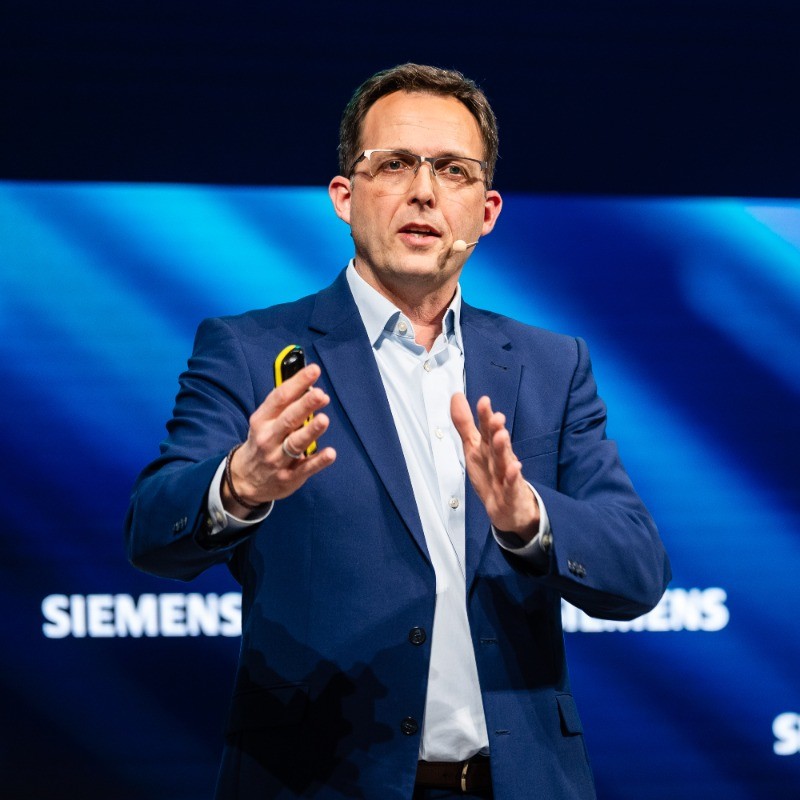
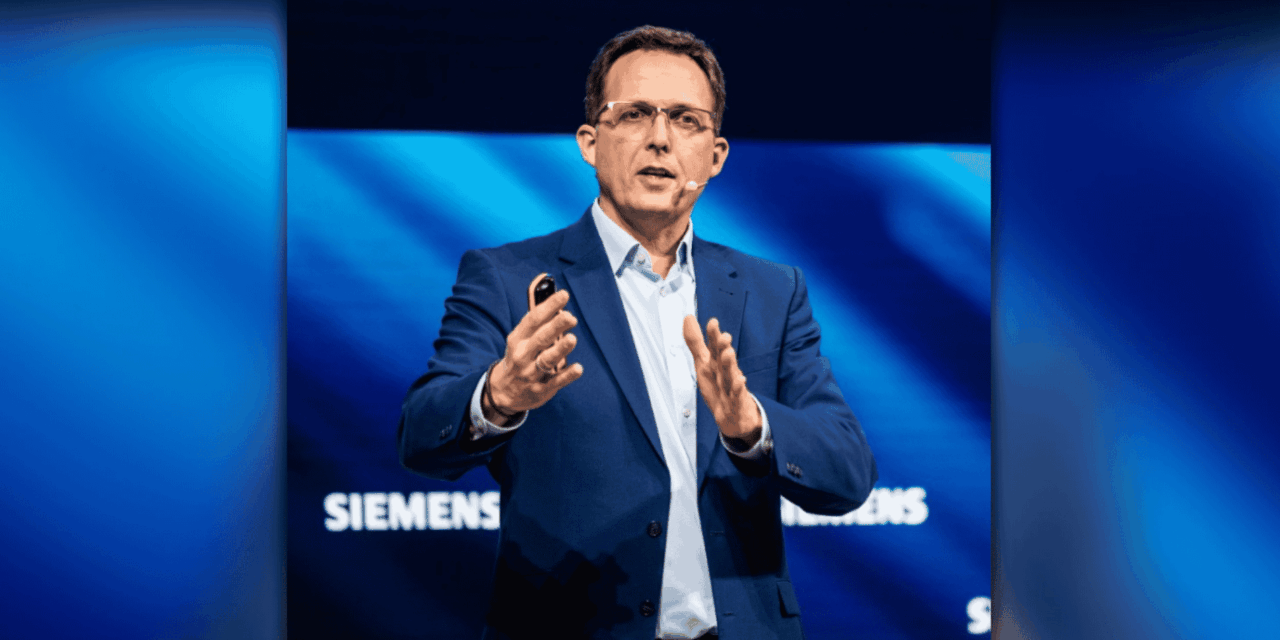
Volker Albrecht, CEO of Siemens Digital Logistics, during his presentation at Hannover Messe 2026 in April 2026.
That’s why breaking down silos is the most important thing. AI accelerates that. It helps in how you plan logistics, in optimizing truck loads – we already use AI to support advanced loading, getting more into each truck when you have different boxes, shapes, diameters. It helps reduce empty truck loads.
We’re also using AI algorithms to calculate the CO₂ footprint across logistics so customers can understand environmental impact. And with our Intelligence X approach, we provide a framework across our offerings that lets customers drive their own agentic AI strategy, or use agentic AI offerings from us.
The openness of that framework is critical and it will strongly influence logistics – or better, the entire supply and value chain, not just one ‘box’ called logistics.
Beyond the immediate use cases, what major AI trends do you see emerging in logistics and supply chains?
Albrecht: When I look at a lot of AI projects and talk to customers and partners, especially at C-level, I see a big ‘fear of missing out’. They want ‘an AI project’ because everything needs to be AI now. I don’t think that’s a good approach.
In logistics – and actually in any domain – you need a clear purpose for AI. If you don’t understand why you’re doing it, the chances of failure are much higher.
Another trend I see is that people often give AI projects to the ‘young and wild’ without bringing in domain experts. In logistics, you must have the logistics experts at the table. Otherwise you’re just doing AI for the sake of AI, and that’s not helpful.
Going forward, we will see capabilities built around agents – agents of agents – forming entire networks. Those agents will make relationships between different domains faster and easier than in the past. That will make breaking down silos technically easier.
There are also rumors that AI will replace scheduling or demand planning. I don’t think AI will replace good demand planners – AI will support them and make them more efficient.
And if you combine AI with physical AI – robots, packaging systems, and so on – there will be a lot of change in the physical world of logistics. But even there, you need to combine it with simulation to make it efficient and safe.
As the world moves towards digital logistics and digital factories, what are the biggest challenges you see?
Albrecht: The challenges are actually very familiar. First, you have data silos. Second, you have organizational silos. Those usually go hand in hand.
Many organizations are not fluent across departments – it’s ‘my department, my budget.’ That mindset is a big obstacle.
Another challenge is how companies frame digital projects. Going digital is too often seen mainly as cost optimization. I think that’s the wrong focus. We should see digitalization and AI as a way of re‑equipping employees, because we are facing a shortage of skilled workforce.
AI can help us balance those challenges: overcoming labor shortages, especially in physical roles like driving trucks, and supporting people in more complex tasks. And, of course, when you move into digital logistics, cybersecurity is an additional challenge that you cannot treat as an afterthought.