





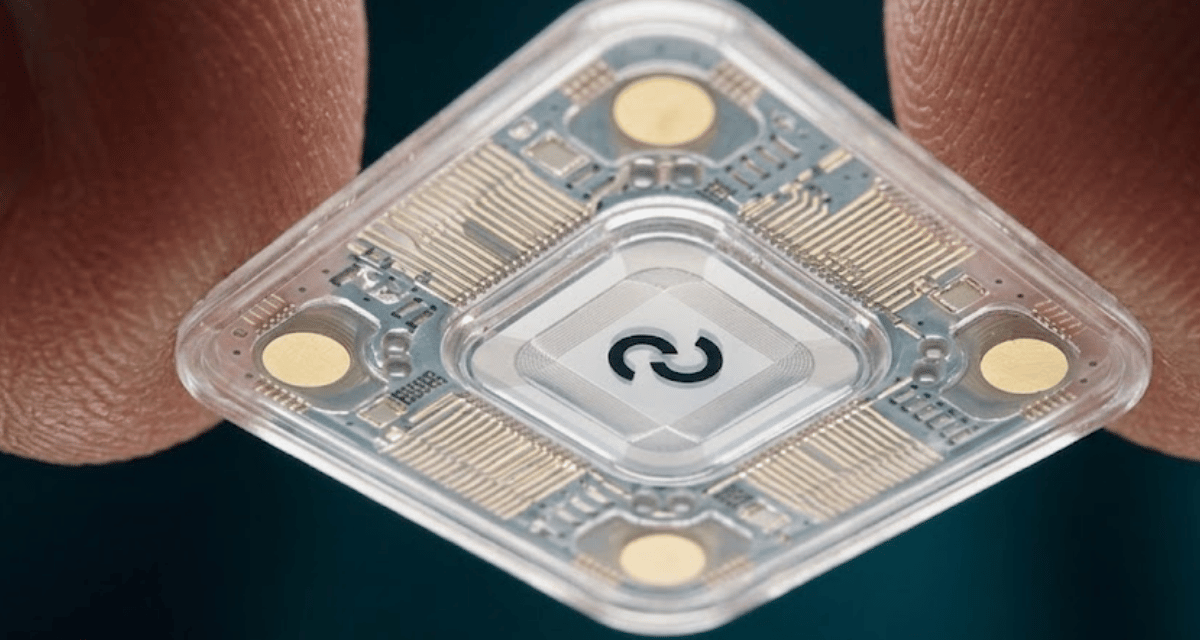
Sulfur co-implantation enables 512-qubit NV-center systems running in standard racks with 99.92% gate fidelity and multi-core entanglement.
A new class of room-temperature quantum processors based on nitrogen-vacancy (NV) centers in synthetic diamond has reached a scale previously-thought-difficult for this architecture — with systems now exceeding 100 physical qubits and, in the most advanced configuration, 512 qubits.
These diamond-based machines operate without cryogenic refrigeration, vacuum chambers, or cleanroom environments, and can be installed in standard 19-inch server racks powered by conventional AC mains.
The enabling innovation is a sulfur co-implantation technique that reportedly converts more than 85% of targeted lattice sites into functional NV centers while allowing precise, high-density placement within the diamond substrate. This manufacturing approach — supported by a portfolio of over 220 patents and applications — underpins the ability to scale beyond the 10-qubit threshold that had limited earlier diamond NV devices.
Measured performance figures indicate single-gate fidelities as high as 99.92%, meaning fewer than one error per thousand operations, alongside coherence times sufficient to execute multi-step quantum algorithms. The architecture is organized around a multi-core, modular quantum operating system (QOS): the 128-qubit variant delivers eight fully entangled qubits per core, while the 512-qubit variant doubles that to 16 entangled qubits per core, enabling more complex entanglement structures within each module.
Another differentiator is energy efficiency: the new systems are claimed to consume six to 10 times less power than comparable GPU-based classical clusters performing similar workloads, and they are engineered for continuous operation with minimal recalibration. This makes them attractive for sustained scientific and industrial workloads such as quantum convolutional neural networks (QCNNs), variational quantum algorithms, materials discovery, and quantum chemistry simulations.
Early deployments of predecessor room-temperature NV systems are already place at research and industrial sites, including the German Aerospace Center (DLR) and the Fraunhofer Institute for Machine Tools and Forming Technology (IWU), where they support tasks ranging from advanced material processing to robotics optimization via on-premises installations and cloud APIs. Software integration is handled through compatibility with Qiskit and OpenQASM, allowing existing quantum development workflows to target the hardware.