




The block’s aggressive fines against US AI enterprises risk excluding the EU from “global race against China”
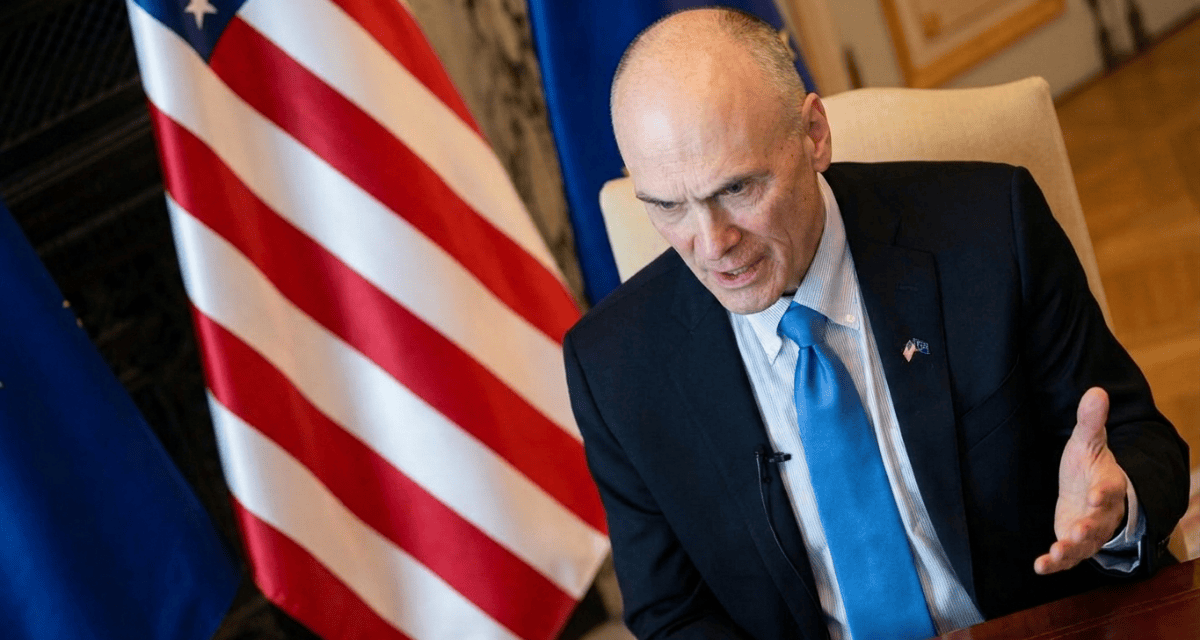
On 9 April 2026, US Ambassador to the European Union Andrew Puzder proclaimed that the bloc should rethink its approach to regulating major technology enterprises if it wants to remain competitive in AI.
Speaking to AFP, he argued that Europe needs access to American cloud services, data centers, hardware, and AI infrastructure rather than policies that push those enterprises away.
His remarks come as the European Commission prepares to unveil next month a package aimed at strengthening Europe’s tech sector and reducing dependence on foreign providers, especially US firms. The measures are expected to cover cloud computing, AI, and semiconductors, sectors in which many European businesses and governments still rely heavily on American suppliers.
Puzder said the US would welcome cooperation with Europe in the global AI race, particularly in competition with China, but added that Brussels must stop “punishing” the enterprises delivering the tools Europe wants to use. He suggested that if the EU continues to regulate and fine those firms aggressively, it may find itself excluded from the AI economy it is trying to build.
The comments add to a widening transatlantic dispute over digital policy. In recent years, the EU has imposed or threatened large penalties on several US technology enterprises over competition, content, and platform practices, drawing criticism from officials in President Donald Trump’s administration. Puzder said European leaders should carefully consider the tradeoffs of that strategy, including whether it could discourage US firms from investing or operating at scale in the bloc.
The issue is likely to remain central as Brussels prepares its broader technology plan, which officials have framed as an effort to build European capacity without excessive reliance on outside firms. For Washington, the message was clear: Europe can regulate Big Tech, or it can rely on it to power its AI ambitions, but doing both aggressively may be difficult.