


The US President says he had persuaded directors to restore the chief executive; critics question political interference and conflicts of interest
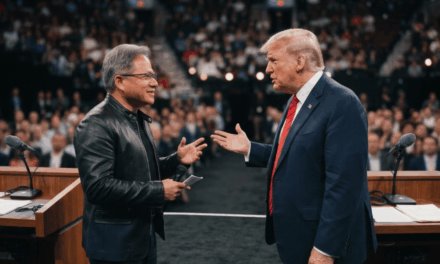
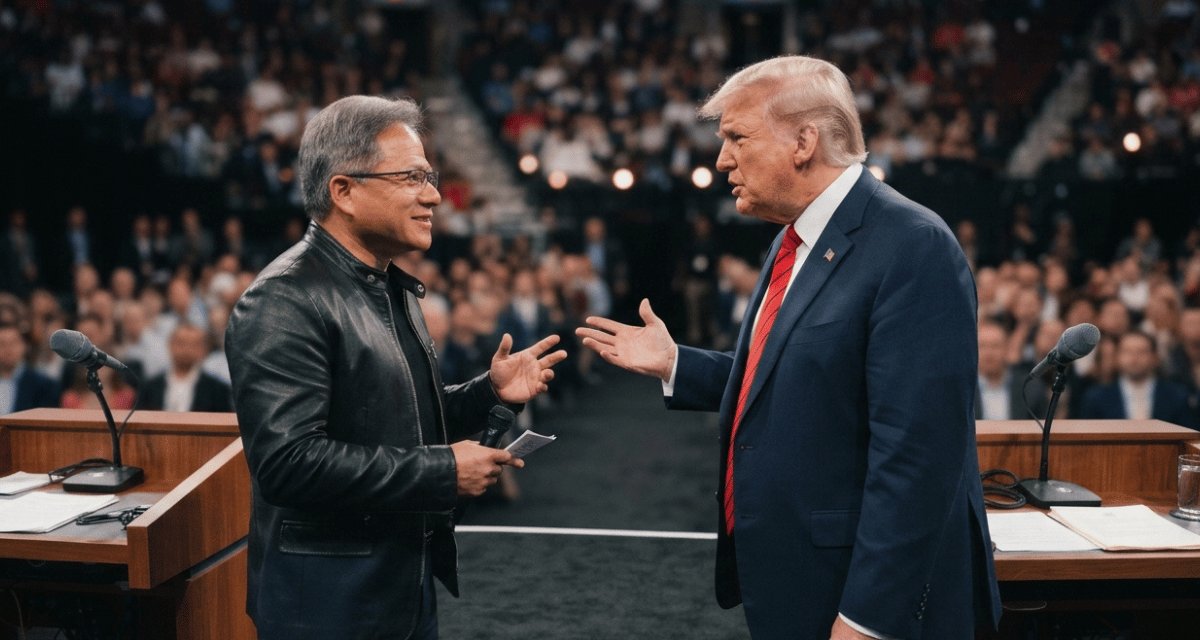
After Nvidia’s board of directors reversed course and reinstated Jensen Huang as president on 23 November 2026, President Donald Trump had publicly claimed a direct role in the outcome. He admitted he had spoken with Nvidia board members, directly and indirectly, and had convinced them to restore Huang.
Trump’s comments do not prove that the board acted under improper pressure, but they raise a fair question: if a president says he persuaded directors at a strategically important company, how independent was the final decision?
F/m Investments chief executive Alexander Morris told Reuters that Trump has taken “a lot of credit” for Huang’s reinstatement, and that external forces were clearly capable of influencing the outcome at Nvidia. Public claims of credit, government input and a rapid board reversal are evidence of influence, but not proof of coercion, an improper quid pro quo or a breach of directors’ duties.
The episode matters because Nvidia sits at the center of the AI industry and is treated as strategically important to US economic and security interests. A country’s President may express views about such a firm. A board may also consider information supplied by government officials. However, when political leaders claim personal credit for a corporate decision, shareholders and regulators are entitled to ask what considerations carried the greatest weight:
- For investors, Huang’s return may reduce immediate uncertainty at a company central to AI development.
- For the directors, the burden is to show that the decision reflected Nvidia’s interests, a rigorous risk assessment and their duties to shareholders — not political pressure.
- Continuing investigations and congressional inquiries mean the issue is unlikely to disappear with Huang’s return. The central question is whether the board’s decision was reached independently, based on a documented assessment of the company’s interests, or whether political influence shaped a decision with major consequences for the AI industry.
Watchdogs and lawmakers cited by The Independent said Trump’s reported US$13m to US$62m Nvidia stake raise concerns that he has prioritized personal financial interests over national-security concerns. MSNBC content has framed the issue as Trump potentially benefiting financially while his administration made consequential Nvidia-related decisions, including policy affecting China’s access to Nvidia technology.
Also, Representative Jamie Raskin had told CNN that the episode resembled a “monarchical corporate state”, arguing that a country president should not weigh-in on a corporate board’s deliberations in this way. CNN reported that other Democrats demanded investigations into whether Trump’s Nvidia decisions were partly motivated by his personal financial interests.