



Organizations across South-east Asia have been leveraging data and now AI to innovate for future impact. What about governments in the region?
Over the last decade, data analytics has undoubtedly made a huge impact on the way enterprises and governments make decisions, innovate and plan.
With generative and agentic AI now hogging the business technology limelight, what does it portend for the future of government and public services, especially with bad actors also leveraging these technology tools for their own benefits?
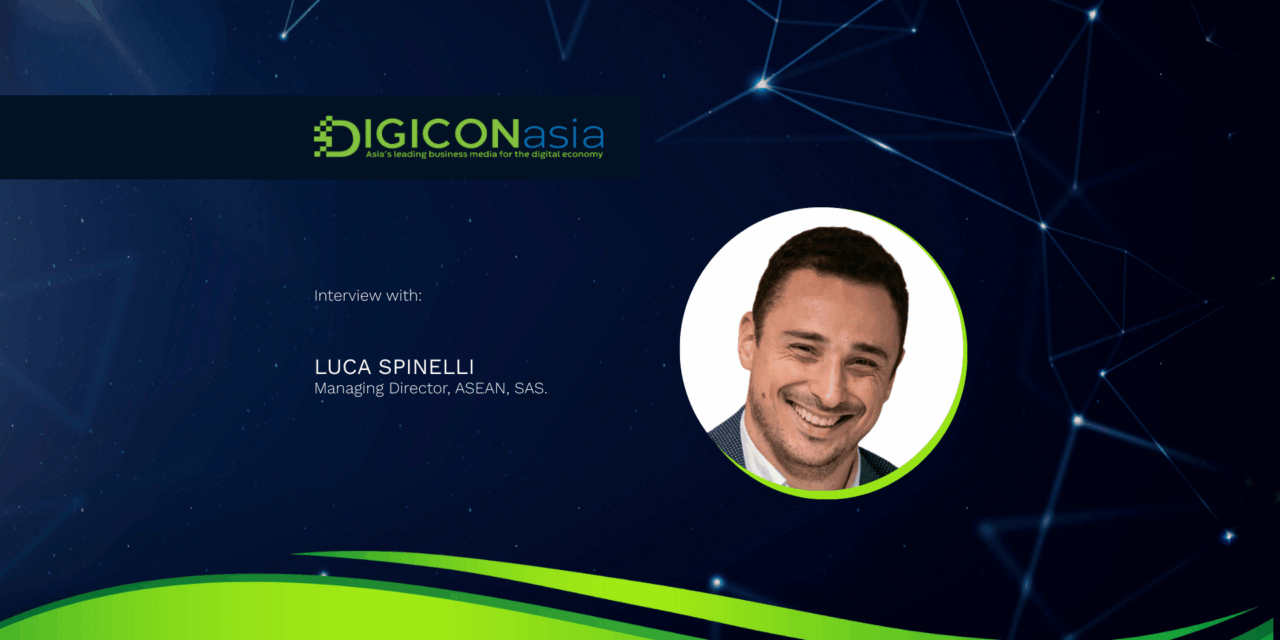
We check out the realities for today and tomorrow with Luca Spinelli, Managing Director, ASEAN, SAS.
How do data analytics and AI combine to enable real-time fraud detection?
Spinelli: Data analytics and AI, when combined, form the backbone of real-time fraud detection by enabling governments and enterprises to make informed, immediate decisions without compromising citizen experience.
Fraud isn’t confined to banking — it affects any organization handling identities, including government agencies delivering social benefits or tax refunds.
Using SAS, public agencies can authenticate both the individual and the transaction in real time. For example, a tax agency can verify that the applicant filing for a refund is the genuine citizen by cross-referencing session data, historical records, and device authentication.
AI models, including machine learning and embedded analytics, score every transaction instantly, detect anomalies, and flag only high-risk interactions — minimizing false positives. Patented signature-based analysis identifies known patterns, while in-memory processing ensures low-latency, high-throughput decisioning. This allows citizens to experience seamless access to services while the system actively deters fraud.
In essence, analytics identifies patterns from historical and real-time data, while AI applies that intelligence to make instantaneous, evidence-backed decisions — transforming public services into both secure and user-friendly digital experiences.
What role does agentic AI play in empowering transparent, autonomous decisions in government and enterprises?
Spinelli: Agentic AI goes beyond traditional AI by orchestrating multiple decisions and actions to achieve defined outcomes autonomously, while remaining transparent and auditable. In the public sector, this might mean an AI agent determining social benefits eligibility for a citizen, completing the application, and executing the approved payment — all while following a governed, ethical decision path.
Transparency and accountability are built into the system through explainable AI (XAI). Every agentic AI decision can be traced back to its underlying logic, inputs, and outputs. This enables human oversight where needed — either in-the-loop for high-stakes decisions or over-the-loop to govern AI behavior at a strategic level.
By embedding these mechanisms, government agencies can establish fairness, consistency, and trust in AI-driven processes while simultaneously improving efficiency and service delivery.
How are generative and agentic AI boosting public sector productivity, and paving the way to more resilient, citizen-centric governments?
Spinelli: Generative AI enhances public sector productivity by generating insights and knowledge that weren’t previously accessible — improving scenario planning, policy analysis, and personalized citizen engagement. Agentic AI then operationalizes these insights, orchestrating multiple data-driven decisions into actionable outcomes.
For instance, SAS’s intelligent decisioning framework supports initiatives like Singapore’s Smart Nation 2.0, where integrated citizen data and AI-driven decisions allow governments to deliver more proactive, personalized services. For instance:
- Jakarta Smart City: SAS helped the city integrate disparate real-time data for flood management and citizen services without building a massive data warehouse. Predictive models and real-time alerts reduced response times dramatically and improved operational efficiency.
- Law enforcement: Agencies now can access intelligence from multiple databases in seconds instead of days, accelerating investigations while maintaining human oversight.
The combination of AI and human intelligence — through human-in-the-loop and human-over-the-loop protocols — provides better outcomes for citizens while fostering trust, accountability, and resilience. Generative and agentic AI enable governments to operate more efficiently, reduce operational friction, and deliver citizen-centric services that are both timely and equitable.
How can we ensure responsible AI – enabling inclusive and culturally aware AI models, ensuring ethical and transparent use, and advancing global AI safety and collaboration?
Spinelli: We approach this by embedding fairness, transparency, and accountability into every AI deployment:
- Explainability and traceability: Every decision, whether generated by analytics, AI, or agentic AI, is auditable. Citizens and agencies can understand why Decision A or B was made, based on underlying regulations, individual circumstances, and ethical guidelines.
- Bias detection and ethical design: Training data is continuously assessed for bias, and agentic AI systems are monitored to prevent discriminatory or unfair outcomes. Human-in-the-loop governance confirms that critical decisions can be reviewed and corrected.
- Governance and compliance: Deployments on platforms like GCC 2.0, GCC+, or on-premise are aligned with security, risk, and ethical standards, ensuring trust in both data quality and outcomes.
- Global collaboration: SAS actively partners with governments, academia, and industry to advance equitable AI innovation. This includes awareness, responsible implementation, and cross-border collaboration to maintain safety and trustworthiness.
By integrating these measures, responsible AI not only drives better operational outcomes but also fosters citizen confidence, ethical service delivery, and a culture of trust in digital government.