




A peek into what compressed innovation cycles look like and how breakthrough technology scales.
At the annual Cyberport Venture & Capital Forum 2026 (CVCF) – which was inaugurated by Lillian Cheong, Hong Kong SAR Acting Secretary for Innovation, Technology and Industry and Simon Chan, Chairman of Cyberport, together with other distinguished guests – Mahesh Krishnaswamy, Founder and CEO, Taara, delivered the opening keynote “The Innovation Playbook: Capitalizing on Moonshots and Faster Cycles in the Age of AI”.
Sharing how Taara evolved from a radical moonshot into a real-world high-speed optical communications solution, he provided a timely lens on compressed innovation cycles and how breakthrough technology scales.
Founded in 2025 as a spin-off from Alphabet’s X Moonshot Factory, Taara develops free-space optics (FSO) communication systems that transmit data through narrow, invisible light beams between two terminals, bypassing traditional fiber or satellite infrastructure.
Taara’s mission is to bring fast, affordable, and abundant internet to underserved communities worldwide, bridging the digital divide and enabling reliable connectivity for education, healthcare, business, and emergency services. By leveraging light-based communication, Taara aims to complement existing infrastructure and provide a new generation of high-speed, resilient networks.
Its flagship product, the Taara Lightbridge, can deliver speeds of up to 30 gigabits per second over distances of up to 20 kilometers, enabling rapid deployment in areas where laying fiber is impractical or costly.
Limitations of existing connectivity infrastructure
As demand for data soars, existing connectivity solutions are reaching their limits… Existing infrastructure cannot scale fast enough for AI-driven data growth,” said Mahesh, who described two main limitations of existing connectivity infrastructure in meeting AI demands:
- Radio networks (2G–5G): They’re capacity-constrained and prone to interference. Adding more radios and moving higher in the spectrum may not keep up with the scale of data expected from AI and machine-to-machine communication.
- Fiber: It can provide high speeds, but deployment is costly and slow because it often requires digging and permits. Fiber also needs ongoing maintenance and can be affected by cuts.
Taara is addressing the AI era’s growing data demands by using light to deliver fiber-like speeds with wireless flexibility. Its Lightbridge can transmit up to 30 Gbps over distances of up to 20 km, without trenching fiber, and is designed to avoid interruptions by detecting and retransmitting if something briefly blocks the beam.
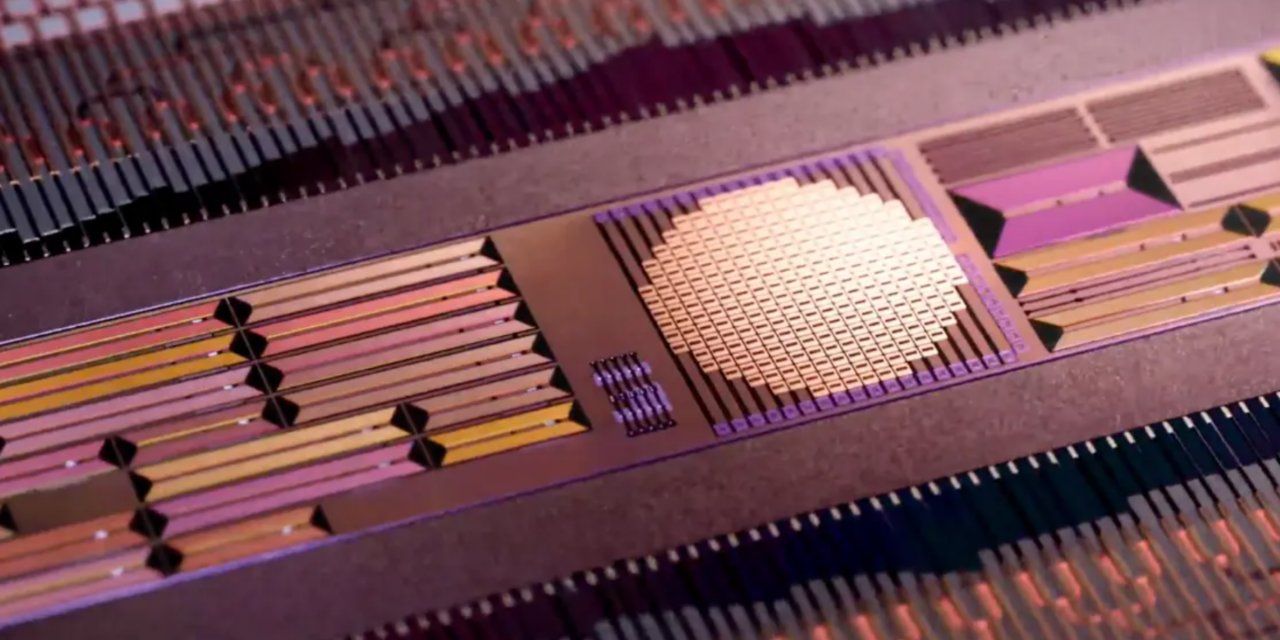
Taara’s technology relies on light-based wireless optical communication, using mirrors, sensors, and advanced software to maintain precise beam alignment. The company is also developing a silicon photonics chip, which miniaturizes the system to the size of a fingertip, reducing mechanical complexity while maintaining high-speed data transmission.
This approach allows for low-latency, high-capacity connectivity suitable for urban, rural, and remote environments, including disaster recovery and temporary high-demand events.
Current technology
Taara’s Lightbridge sends data wirelessly over a beam of light, aiming to combine fiber-like capacity with wireless flexibility. Mahesh said it can deliver up to 30 Gbps and connect locations without digging trenches or laying fiber.
Paired terminals lock onto one another and can extend connectivity over 20 km. The system can detect obstructions, such as a bird, and retransmit the beam to avoid interrupting the connection.
Advantages of this technology include:
- Rapid deployment: Links can be installed in hours without trenching or permits.
- High-speed connectivity: Fiber-class speeds with low latency.
- Flexibility and scalability: Can extend networks in dense cities, remote areas, or temporary events.
- Cost-effectiveness: Cheaper than fiber and faster than satellite solutions like Starlink
Deployments and use cases
Mahesh said deployments actually began in 2017 and span more than 20 countries, including Africa, India, North America, and Southeast Asia.
Examples include connecting a data center to a peri-urban community, adding capacity to carrier networks, and linking enterprises and campuses.
The technology supports telecom operators, mobile networks, enterprises, and smart city infrastructure, offering rapid deployment, scalability, and resilience in challenging terrains. Notable deployments include bridging the Congo River between Brazzaville and Kinshasa, providing connectivity where fiber installation is prohibitively expensive.
For one community example, he described bringing broadband at speeds comparable to those in developed countries for under $10 per month.
Optical phased array roadmap
Taara’s next step, as described in the keynote address, is to shrink the current system into a fingernail-sized chip.
Mahesh explained that optical phased arrays would help focus the light beam and steer light through atmospheric conditions, so operators can manage atmospheric disturbances while delivering high-capacity bandwidth.
The aim is to make high-capacity links easier to deploy between data centers, enterprises, campuses, communities, and eventually smart-city infrastructure, as well as connectivity for autonomous vehicles, drones, events and emergency response.
“I started this talk with moonshots and taking moonshots,” he said. “Our moonshot is not to just connect one community or one building or one stadium at a time, but to find a way to enhance global connectivity using light, and what that really comes back to is finding a way to build these moonshots and finding a way to scale them going forward.”
To do that, the company took inspiration from the semiconductor industry “where computers the size of a room have shrunk and given way to a microprocessor”, offering far greater speeds and capacity despite shrinking the form factor and cost.
“And that’s exactly the moonshot that we’re taking on next: to take our current product and shrinking it down to a chip the size of my fingernail… We started work on it over the last few years, and it will revolutionize the way we are able to transmit data in this AI age.”