



Here is some guidance for early‑stage founders on risk‑aware architecture, automation, data governance, and when to hire a tech leader.
Non‑IT startups face a unique paradox today: technology is their greatest growth lever, yet it could be one of their most significant operational risks.
Without a technical co‑founder, many e-entrepreneurs treat IT as a “bolt‑on” rather than a core strategy, leading to costly reworks and security vulnerabilities.
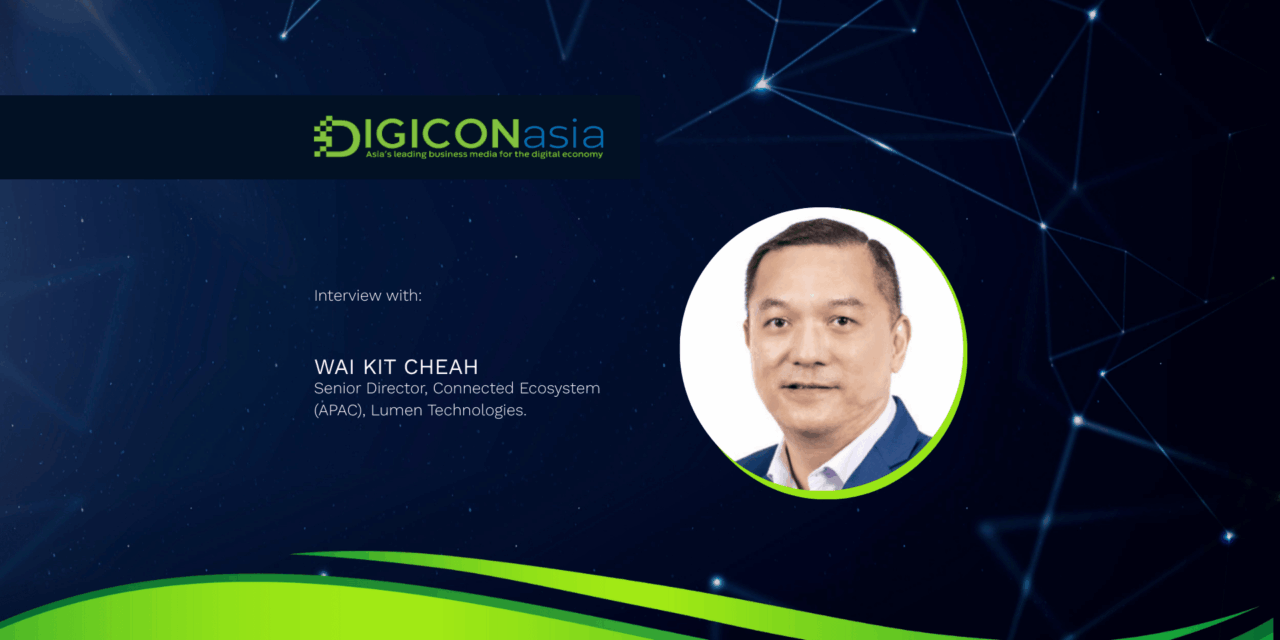
How can new‑age non‑IT startups in such scenarios master IT infrastructure planning? DigiconAsia.net obtains some insights from Wai Kit Cheah, Senior Director, Connected Ecosystem (APAC), Lumen Technologies.
DigiconAsia: What are the most common tech mistakes non‑tech startups make in the early phase, and how should they, in your opinion, rethink IT’s role?
Wai Kit Cheah (WK): Non‑technical startups often assume that implementation is the hardest part. In reality, the challenge lies in establishing the right foundations before the first line of code is written. Other misconceptions include:
- Treating IT as a side project: Digital and AI initiatives are not “add‑ons”; they are fundamental business enablers. They must align with business objectives to change how the organization operates.
- Underestimating security and compliance: Startups often delay security considerations until after launch. This leads to vulnerabilities and expensive remediation. Embedding compliance into the operating model from Day 1 is far cheaper than retrofitting it later.
- Ignoring data readiness: Many rush ahead without assessing data quality or governance. Poor data foundations undermine analytics and AI initiatives before they even begin.
DigiconAsia: How can non‑tech startups and firms plan and deploy safe, scalable infrastructure without deep technical expertise, and what role should external partners play?
WK: It starts with not just tools, but the strategy. The goal is to create an environment that is secure by design:
- Risk assessment: Map out risks to critical assets and customer trust before selecting tools.
- Zero‑trust mindset: Assume no user or device is inherently trusted. Implement multi‑factor authentication (MFA) and continuous monitoring immediately.
- Modular architecture: Use cloud‑native services that scale with your business, to avoid “hardcoding” security as an afterthought.
- People and process: Technology alone will not keep the organization safe. Train teams on security hygiene and treat cybersecurity as a business enabler, not a cost center.
- Partnerships: You do not have to build everything. Partner with carefully chosen external providers for managed security and 24/7 monitoring to reduce complexity.
DigiconAsia: To avoid scaling and compliance issues, what are the top tech investments early‑stage non‑tech firms should prioritize?
WK: To avoid the “fix‑it‑when‑it‑breaks” trap, startups should prioritize:
- Workflow automation: Manual processes do not scale. Adopt customer relations management systems and standard operating procedures early to reduce operational friction.
- Embedded security controls: As AI and third‑party tools become everyday staples, you need robust identity management and proactive governance of “shadow AI” to prevent data leakage.
- Clean data pipelines: Invest in integration tools that connect systems without creating silos. This ensures AI and analytics do not hit bottlenecks caused by poor‑quality data.
- Privacy‑by‑design foundations: Use principles such as data minimization and encryption, from the start. By establishing clear data ownership and audit trails early, you avoid the scramble to retrofit controls when a new regulation is announced.
DigiconAsia: When should founders hire a dedicated tech leader, and what signals indicate it is time for a major investment in security and infrastructure?
Wai Kit: It becomes critical when technology stops being a support function and starts shaping business outcomes. Signals include:
- Systems constraining your growth
- Security trade‑offs that the founders cannot confidently assess
- Teams spending more time “working around” tools than using them
- A dedicated leader ensures that infrastructure decisions are strategic and proactive rather than reactive
The “inflection point” for major security investment is usually marked by:
- Data sensitivity: A rapid growth in intellectual property or regulated customer data
- Expanding attack surface: Increasing use of APIs, remote workforces, or IoT devices
- Operational strain: Frequent downtimes, slow incident response, or repeated “near‑misses”
- Stakeholder pressure: Rising expectations from investors or enterprise customers for formalized security practices
DigiconAsia thanks Wai Kit Cheah for sharing his insights with readers interested in this topic.