





LOGIN REGISTER
DigiconAsia
  • Features
    • Featured

      Deployment outpacing validation in digital experience

      Deployment outpacing validation in digital experience

      Friday, June 12, 2026, 9:26 AM Asia/Singapore | Features
    • Featured

      Bridging the gap from AI prototype to production

      Bridging the gap from AI prototype to production

      Wednesday, June 10, 2026, 1:53 PM Asia/Singapore | Features
    • Featured

      Data centers and the digital infrastructure crunch in Asia

      Data centers and the digital infrastructure crunch in Asia

      Monday, June 8, 2026, 3:02 PM Asia/Singapore | Features
  • News
    • Featured

      Mobile traffic turns more upload-heavy as 5G use deepens: data reports

      Mobile traffic turns more upload-heavy as 5G use deepens: data reports

      Friday, June 19, 2026, 11:59 AM Asia/Singapore | Mobile Strategies, News
    • Featured

      Estonia aims to be first country to grant official digital IDs for AI agents

      Estonia aims to be first country to grant official digital IDs for AI agents

      Friday, June 19, 2026, 11:54 AM Asia/Singapore | News
    • Featured

      Digital ethics researchers propose copyleft licensing for AI models trained on open-source code

      Digital ethics researchers propose copyleft licensing for AI models trained on open-source code

      Thursday, June 18, 2026, 3:14 PM Asia/Singapore | News
  • Perspectives
  • Tips & Strategies
  • Whitepapers
  • Directory
  • E-Learning

Select Page

News

AI models of the human brain work, but scientists are confounded

By DigiconAsia Editors | Monday, September 1, 2025, 2:20 PM Asia/Singapore

AI models of the human brain work, but scientists are confounded

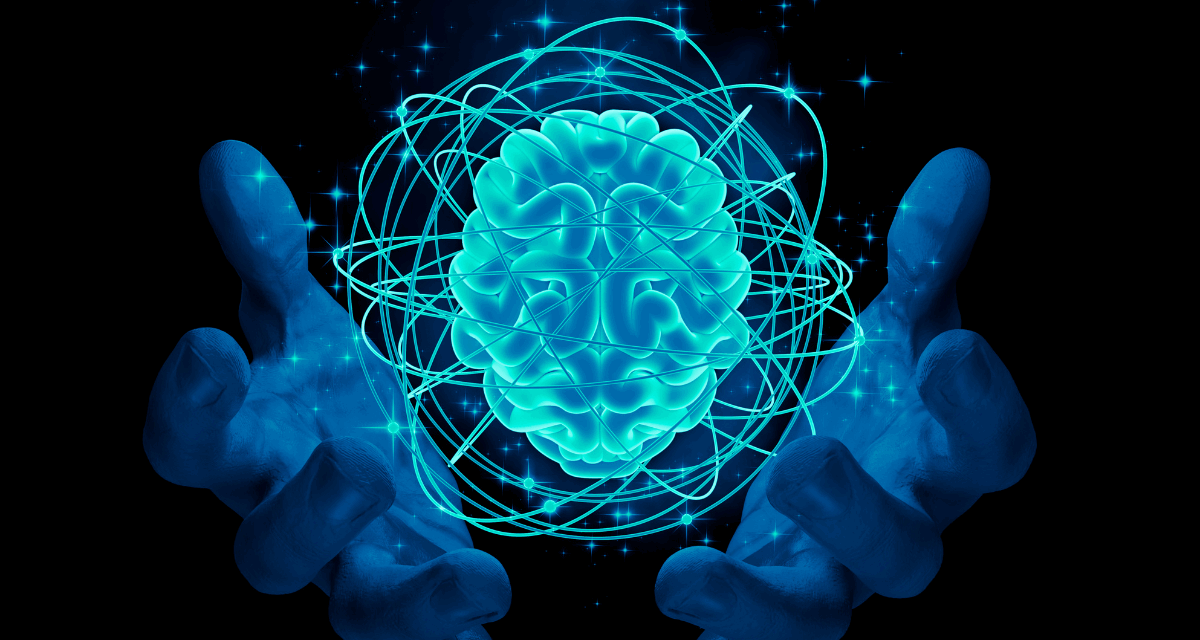
The models predict human behaviors well, but researchers remain unsure how these computational systems mimic actual brain processes.

Scientists are harnessing AI to probe the depths of the human mind, according to a recent article in MIT Technology Review.

Two landmark studies published in Nature showcase both the promise and limitations of using neural networks to understand cognition — a quest that sits at the intersection of neuroscience, psychology —  and cutting-edge AI research originating from academia.

Researchers have drawn parallels between biological brains and artificial neural networks: while large language models (LLMs) require immense computational and energy resources, they share with brains the unique ability to generate language and model behavior.

One MIT-affiliated study adapted an LLM to form a “foundation model of human cognition,” fine-tuned with data from over 160 psychology experiments. This AI model, dubbed Centaur, has surpassed traditional psychological models in predicting human responses across various problem-solving scenarios from gambling choices to memory recall tasks.

Experts believe that such predictive power could help scientists simulate complex cognitive experiments digitally, saving time and resources. More importantly, by investigating how Centaur achieves its results, psychologists could uncover new theories about mental processes.

Yet, skepticism persists. Some psychologists note that Centaur, with its immense computational heft, may mimic human outputs without reflecting mental processes, likening it to a calculator that computes answers correctly but offers no insight into how people think. This raises doubts about the interpretability of vast AI models.

To bridge this gap, the second Nature study focused on much smaller neural networks — sometimes with only one artificial neuron. These mini-networks, while tailored to predict behavior in specific contexts (such as gambling choices), can be analyzed in detail, allowing scientists to trace every step in decision-making and build testable hypotheses about biological cognition. The key challenge remains: highly accurate, large-scale models are hard to interpret, while smaller models may lack generality.

While researchers can use AI to predict what a brain or a person may or may not do in a given situation with increasing accuracy, they are still struggling to explain why these predictions work and what they reveal about underlying mental or computational processes.


Share:

PreviousOne nation’s push against DEI disrupts steady global progress and harmony
NextHow are people in 15 countries leveraging AI for travel planning?

Related Posts

Why the time for biometric ID systems has come

Why the time for biometric ID systems has come

May 24, 2020

Independent research finds manufacturers are struggling to make EVs more sustainable

Independent research finds manufacturers are struggling to make EVs more sustainable

April 13, 2022

Donald Trump prepares draft executive order aims to block state-level AI regulations

Donald Trump prepares draft executive order aims to block state-level AI regulations

November 29, 2025

Is India’s tech market the eye of the global 2023 storm?

Is India’s tech market the eye of the global 2023 storm?

April 21, 2023

Leave a reply Cancel reply

You must be logged in to post a comment.

Awards Nomination Banner

gamification list

PARTICIPATE NOW

top placement

Whitepapers

  • Achieve Modernization Without the Complexity

    Achieve Modernization Without the Complexity

    Transforming IT infrastructure is crucial …Download Whitepaper
  • 5 Steps to Boost IT Infrastructure Reliability

    5 Steps to Boost IT Infrastructure Reliability

    In today's fast-evolving tech landscape, …Download Whitepaper
  • Simplify Payroll Setup for Your Small Business

    Simplify Payroll Setup for Your Small Business

    In our free guide, "How …Download Whitepaper
  • Overcoming the Challenges of Cost & Complexity in the Cloud-first Era.

    Overcoming the Challenges of Cost & Complexity in the Cloud-first Era.

    Download Whitepaper

Middle Placement

Case Studies

  • The 48-hour lifeline: How the IRC rewrote the rules for crisis care

    The 48-hour lifeline: How the IRC rewrote the rules for crisis care

    In a world where crises …Read More
  • CALB upgrades data platform to support analytics, security, and battery lifecycle tracking

    CALB upgrades data platform to support analytics, security, and battery lifecycle tracking

    Deploying a petabyte-scale data lake …Read More
  • How a Vietnamese D2C retailer built its own secure digital infrastructure

    How a Vietnamese D2C retailer built its own secure digital infrastructure

    Would your organization build your …Read More
  • Liverpool FC to deliver more personalized, real-time digital fan experiences with AI

    Liverpool FC to deliver more personalized, real-time digital fan experiences with AI

    The football club will deepen …Read More

Bottom Sidebar

Other News

  • Felicitysolar Strengthens Brand Presence at SNEC 2026

    June 21, 2026
    GUANGZHOU, China, June 20, 2026 …Read More »
  • Longbridge Group Opens New Singapore Headquarters at Asia Square, Marina Bay

    June 20, 2026
    HONG KONG, June 19, 2026 …Read More »
  • PhilWeb Corporation Unveils Refreshed Corporate Identity and New Corporate Website, Signaling Transition to Technology-Driven Infrastructure

    June 19, 2026
    MANILA, Philippines, June 19, 2026 …Read More »
  • Resilience Actions, a Re Sustainability Initiative, Launches ECOHUB.IN to Power India’s Climate and Circular Economy Innovation Ecosystem

    June 19, 2026
    HYDERABAD, India, June 19, 2026 …Read More »
  • LUMIQ Raises Strategic Funding to Become the AI Decision Layer for Financial Services

    June 19, 2026
    While most AI in financial …Read More »
  • Our Brands
  • CybersecAsia
  • MartechAsia
  • Home
  • About Us
  • Contact Us
  • Sitemap
  • Privacy & Cookies
  • Terms of Use
  • Advertising & Reprint Policy
  • Media Kit
  • Subscribe
  • Manage Subscriptions
  • Newsletter

Copyright © 2026 DigiconAsia All Rights Reserved.