




Cloud expansion, localization rules and real-time telemetry are pushing operators to prove data residency and control across jurisdictions, this writer argues
The clearest signal of where data governance is heading comes from the cloud giants themselves.
In January 2020, AWS operated 69 availability zones across 22 regions. It now reports 124 zones across 39 regions, nearly doubling its availability zones in less than seven years. Google Cloud spans 43 regions and 130 zones, while Microsoft reported more than 70 Azure regions across 33 countries in October 2025.
AWS’s launches in Thailand and Malaysia highlighted data residency needs. In January 2026, it opened its European Sovereign Cloud in Germany, with infrastructure physically and logically separate from its other regions and located entirely within the EU.
For providers serving public infrastructure, these investments send a clear message: data sovereignty is becoming an increasingly important consideration. Governments need confidence that the systems supporting essential services remain accountable, accessible and operational under pressure.
Movement data is strategic data
Industry understanding of sensitive data has to extend beyond citizen records, tax files and health information. Real-time GPS and movement data can be equally revealing. Aggregated transit logs can expose patrol patterns, movements around sensitive facilities, critical supply routes and infrastructure dependencies.
By early 2023 an OECD study had identified 100 data localization measures across 40 countries, with more than two-thirds combining local storage requirements with prohibitions on data flows. For fleet and transit operators working across jurisdictions, these requirements make data architecture a business decision from the outset.
“Real-Time” leaves little room for disruption
Why the urgency? Because real-time data behaves differently from archives. A 20-minute interruption to historical reporting can delay analysis; a 20-minute blackout of live fleet telemetry during an incident can disrupt dispatch and slow emergency response.
No government wants a flood, grid failure, subsea cable cut or geopolitical disruption elsewhere to take down its own transit visibility. Keeping the data pipeline in-country can reduce dependence on overseas infrastructure and international connectivity. It must also be backed by local redundancy and tested recovery plans.
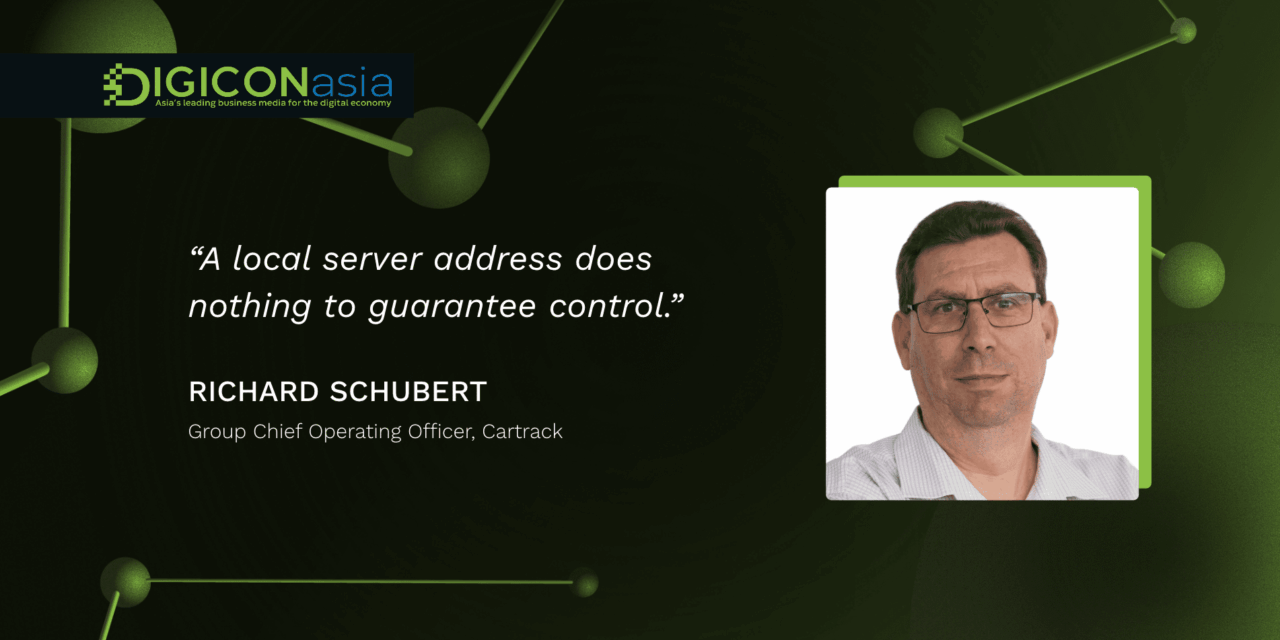
Overseas storage also introduces exposure to foreign legal processes. Local hosting can help address residency requirements, but the provider’s ownership, access arrangements and applicable laws still matter. A local server address does nothing to guarantee control.
Continuous telemetry also demands protection throughout transmission and processing. Reducing unnecessary intermediaries can simplify oversight, but secure connections, encryption and access controls remain essential wherever data travels.
Accountability starts with architecture
In processing billions of locations and sensor data points from more than 2.5m connected vehicles across more than 24 countries, I feel that, at that scale, architecture decisions shape the responsiveness and reliability customers experience.
In our experience, public-sector procurement has become more demanding about data residency and control. The questions extend beyond functionality and price:
- Who can access the information?
- Which jurisdictions apply?
- Who takes responsibility during an incident?
Providers should demonstrate these controls before deployment, rather than explain them after a failure. A good model could possess the following advantages:
- A provider that possesses direct oversight of the systems customers depend on, as well as demonstrates a clear responsibility for performance.
- Local hosting as part of the services are delivered, bringing infrastructure closer to customers’ operations to support faster responses and closer oversight of data handling.
- Consistent reliability and data sovereignty metrics resulting from strong security controls, reliable support and a clear process for responding to incidents.
Trust must be earned before deployment
The threat landscape is changing faster than procurement cycles: AI gives attackers new ways to scale reconnaissance, phishing and attempts to compromise systems, and every business handling mobility or infrastructure data needs to keep strengthening its defenses, including those without government contracts.
Private operators are becoming custodians of information that supports public services and commercial networks. A telematics provider serving buses, ambulances or logistics fleets contributes to the resilience of those operations. That responsibility should shape its investment and governance long before a tender demands it.
The firms that earn lasting trust will make sovereignty part of how they build and operate. They will show who is responsible, restrict access, maintain suitable local infrastructure and keep investing in security constantly.
For technology providers serving public infrastructure, sovereignty needs to be built into the architecture, contracts and operating practices from the start.
The ability to demonstrate where data resides, who controls it and how essential services will continue when tested is becoming an important measure of trust.