




AI investment is accelerating, but many financial institutions still rely on fragmented legacy systems that were not designed to support AI at scale.
Cloudera’s Data Readiness Index 2026 found that 38% of financial services institutions globally say infrastructure performance consistently hinders operational initiatives, while 20% identify weak workflow integration as the leading reason AI and analytics investments fail to deliver expected returns.
On the governance front, only 61% report having all or nearly all their data governed, pointing to gaps that could become more significant as AI adoption accelerates.
The challenge is also observed across APAC. While 51% of surveyed organisations plan to increase cloud spending, only 27% report that their data sources are fully integrated across systems and environments.
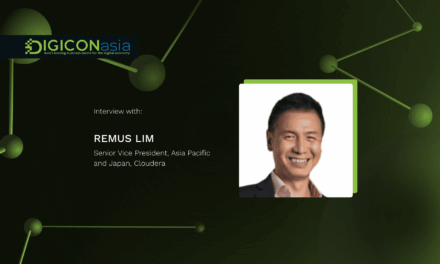
Parallel to the Singapore Fintech Festival (SFF) 2026’s theme, The Coming Rewiring of the Financial System: New Risks. New Rules. New Growth, which examines how emerging technologies and evolving regulations are reshaping financial services, Remus Lim, Senior Vice President, Asia Pacific and Japan, Cloudera, shares his perspective.

Remus Lim, Senior Vice President, Asia Pacific and Japan, Cloudera
Why are financial institutions in APAC continuing to face infrastructure and integration challenges despite growing AI investments, and what does it take to integrate AI into their core business?
Lim: Financial institutions need to modernise their data foundations by connecting fragmented legacy systems, improving data quality and establishing scalable data pipelines that make information accessible across the organisation.
This includes moving beyond traditional batch processing towards real-time data ingestion and processing, so AI models can use the latest transaction and customer information to support timely decisions. With these capabilities in place, banks can integrate AI more effectively into core workflows such as fraud detection, risk management, compliance and customer service.
A hybrid data architecture further allows institutions to deploy AI workloads across public cloud, private cloud and on-premises environments based on latency, performance, cost and regulatory requirements.
By bringing AI capabilities closer to where sensitive data resides, banks can reduce unnecessary data movement, maintain greater control over their infrastructure and support data sovereignty requirements without having to consolidate everything into a single environment.
If visibility into data is not enough, how should financial institutions ensure consistent governance and secure access to data across cloud and on-premises environments?
Lim: Knowing where data resides does not necessarily mean it is always accessible, secure or consistently governed. Cloudera’s Data Readiness Index 2026 found that 85% of APAC respondents report complete visibility into their data, yet only 10% say all their data is fully governed. This gap becomes more significant as financial institutions expand AI across multiple environments and business functions.
This includes moving beyond traditional batch processing towards real-time data ingestion and processing, so AI models can use the latest transaction and customer information to support timely decisions. With these capabilities in place, banks can integrate AI more effectively into core workflows such as fraud detection, risk management, compliance and customer service.
A hybrid data architecture further allows institutions to deploy AI workloads across public cloud, private cloud and on-premises environments based on latency, performance, cost and regulatory requirements.
By bringing AI capabilities closer to where sensitive data resides, banks can reduce unnecessary data movement, maintain greater control over their infrastructure and support data sovereignty requirements without having to consolidate everything into a single environment.
If visibility into data is not enough, how should financial institutions ensure consistent governance and secure access to data across cloud and on-premises environments?
Lim: Knowing where data resides does not necessarily mean it is always accessible, secure or consistently governed. Cloudera’s Data Readiness Index 2026 found that 85% of APAC respondents report complete visibility into their data, yet only 10% say all their data is fully governed. This gap becomes more significant as financial institutions expand AI across multiple environments and business functions.
For financial institutions operating across multiple jurisdictions, this creates challenges in protecting sensitive customer information and meeting different regulatory requirements. Banks need consistent data classification, access controls and lineage tracking to understand who can access information, how it is processed and whether it crosses jurisdictional boundaries. These controls must extend to data in motion, ensuring that information used in real-time fraud detection, payments and risk monitoring remains secure and auditable as it moves between systems.
Data sovereignty also goes beyond keeping information within national borders. While data residency determines where information is physically stored, sovereignty concerns which laws apply and whether institutions can maintain effective control over its use.
As AI adoption expands, these controls must cover the entire AI lifecycle, including model training, deployment and derived outputs. AI models and generated insights may contain sensitive information even when the original datasets remain within approved environments.
A unified governance approach allows banks to apply common policies across distributed systems while enforcing jurisdiction-specific restrictions on where data can be processed or transferred. Rather than moving sensitive datasets into external platforms, institutions can bring AI capabilities to governed data wherever it resides.
As AI systems take on more autonomous roles in financial services, what additional considerations will banks need to address around data reliability, accountability and oversight?
Lim: As AI moves beyond generating insights towards executing tasks, banks face greater responsibility for ensuring that automated decisions are reliable and remain within approved boundaries.
While clear accountability remains essential, it is no longer sufficient on its own. Autonomous agents can retrieve sensitive information, modify records and initiate workflows across connected systems at machine speed, potentially causing consequences before human teams can intervene.
Banks must therefore assess not only what an agent can access, but also its “blast radius”, the potential impact of its actions across different systems. This requires continuous authorization and behavioral monitoring to detect deviations from assigned tasks, unusual tool usage and attempts to access sensitive information outside an agent’s intended scope.
Higher-risk actions should require additional authorization or human approval. I believe that’s why Singapore’s Monetary Authority of Singapore (MAS) has also issued AI Risk Management Guidelines, reinforcing the importance of governance, risk management and human oversight as financial institutions adopt AI.
Beyond establishing accountability, banks need mechanisms to intervene when agents behave unexpectedly. This includes immediately suspending agents, revoking credentials, isolating affected workloads and maintaining tamper-resistant audit trails to support investigation and recovery.
Ultimately, effective oversight must go beyond establishing who is responsible for AI decisions to ensuring that autonomous actions can be controlled, interrupted and contained in real time.