




Operator measurements and Swiss regulator data show rising bidirectional usage, with cloud syncing, messaging, and video communication driving greater upload demand.
According to several data sources, mobile users are sending more data from their phones as video calls, cloud backups, short-form video and other interactive services reshape traffic patterns, while 5G is taking a larger share of everyday network use.
Traffic on mobile networks has long been dominated by downloads, mainly from video streaming and web browsing, but data trends are indicating that usage is becoming more two-way, as consumers create, share and store more content from their devices. That shift is raising the importance of upload capacity, especially as cloud synchronization, messaging, video communication and user-generated media become more central to everyday smartphone use.
One recent set of operator measurements (for June 2026) from Ericsson, has noted upload growth running faster than download growth across most networks tracked, reinforcing the view that mobile behavior is changing. Separate official data points in the same direction: Switzerland’s communications regulator Federal Communications Commission (ComCom), has announced that 5G accounted for 43% of mobile data traffic at the end of 2025, up from 34% a year earlier, underscoring how quickly newer networks are becoming part of routine consumer use. [Editor’s note: Global 5G investments have a difficult story of struggles and triumphs behind them and IIoT cyber challenges].
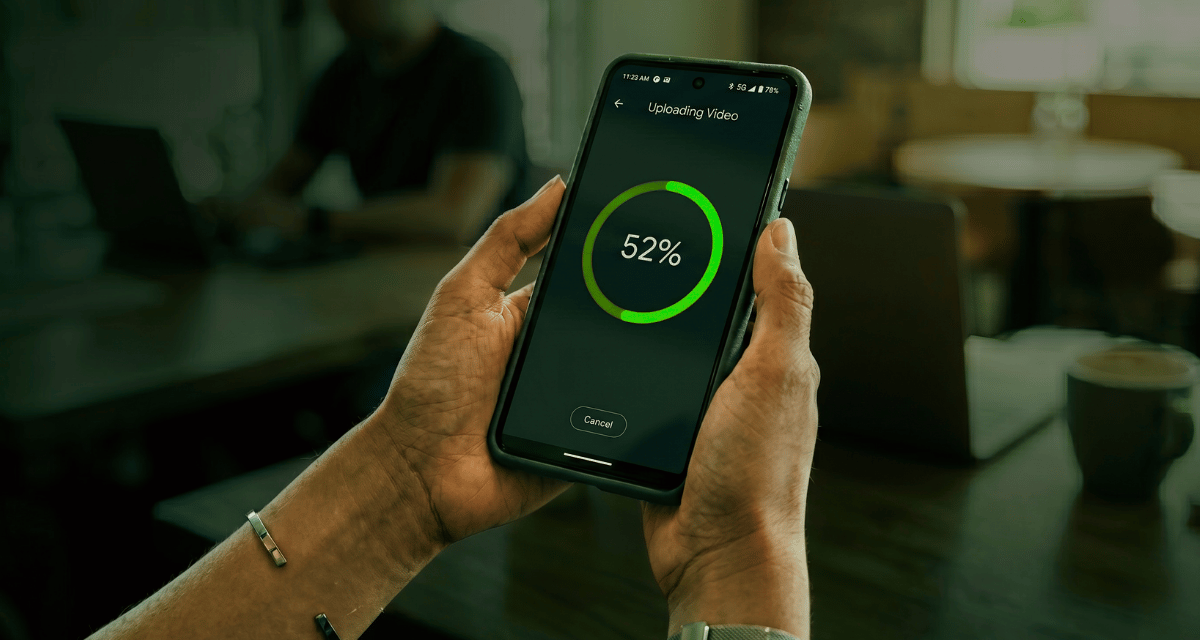
Comcom has also noted that global mobile data traffic continues to rise, as subscribers shift to newer mobile generations, reinforcing the idea that adoption is increasingly translating into actual usage rather than headline-grabbing subscription counts alone. That matters because 5G is no longer just an upgrade story tied to coverage maps and handset launches: As more traffic shifts onto newer networks, operators face growing pressure to balance capacity for both downloads and uploads, rather than treating mobile demand mainly as a one-way stream of entertainment. The change could shape future decisions on network investment, pricing and service quality. Upload-heavy behavior is tied less to passive viewing and more to active digital habits such as backing up photos, joining video meetings, sending high-resolution clips and using apps that constantly exchange data with cloud services.
For consumers, the trend signals a broader shift in mobile life: phones are no longer mainly devices for receiving content, but increasingly becoming tools for producing, sharing and synchronizing it in real time.