





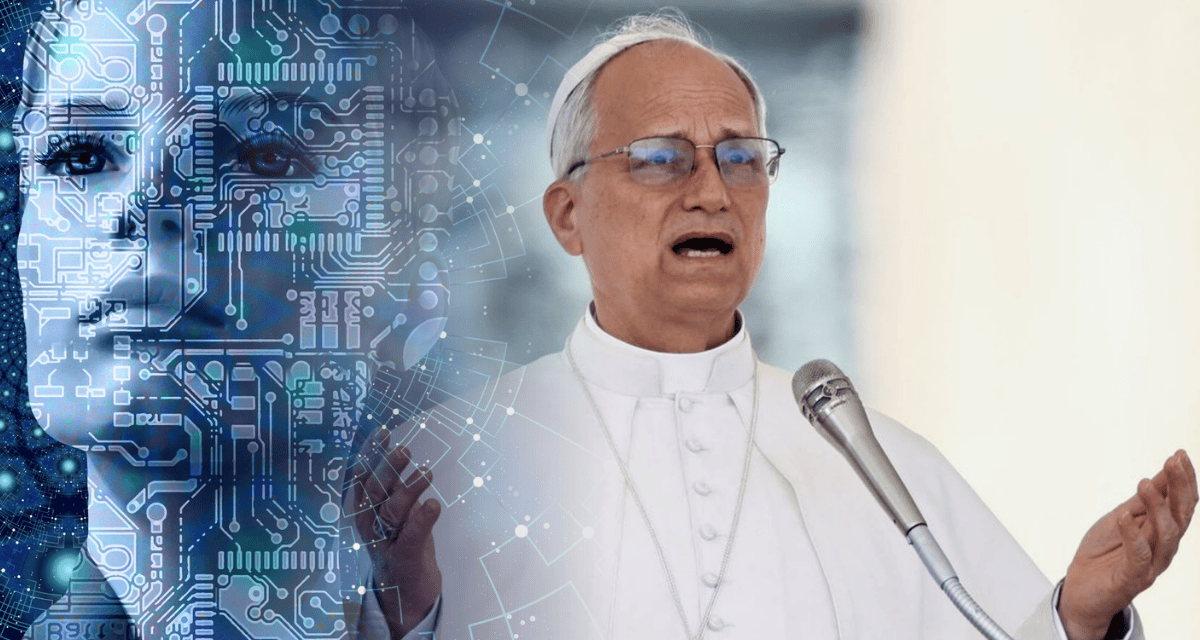
Anthropological risks arise from opaque algorithms, deepfakes, and militarization, demanding binding oversight, ethical governance, and accountable platforms serving the common good.
In intensifying his campaign for global rules on responsible AI development, Pope Leo XIV is warning that unregulated AI risks harming human dignity, work, democracy, and even the integrity of the Church’s own voice online.
Pope Leo frames AI as a moral and social crossroads comparable to past industrial revolutions, and is calling for a coordinated international response grounded in human rights rather than commercial or military interests.
In recent addresses and written messages, Leo XIV has repeatedly identified AI as one of the defining challenges of his papacy, arguing that new technologies must never override the value of the human person.
A moral red line for AI
The warning goes thus: AI systems and their algorithms can erode thoughtful reflection by privileging speed, outrage, and superficial emotion, trapping users in “bubbles of easy consensus and easy indignation” that deepen polarization. Generative AI, Pope Leo notes, now imitates human images, voices, and texts so convincingly that it threatens authentic relationships and stable identities, especially when deepfakes target public figures, including popes. That means, the core AI challenge is not technical but anthropological: who controls these systems, whose interests they serve, and what vision of the human person they embed.
Further, the Pope has condemned the “oligopolistic control” of AI platforms that quietly steer behavior and can even rewrite historical memory, including Church history, without users realizing they are being manipulated. Children and adolescents, he notes, are particularly vulnerable to AI-driven content that profiles, nudges, and exploits them at scale.
Call for treaties, transparency, shared responsibility
Building on appeals begun under Pope Francis for an international AI treaty that keeps lethal decision-making in human hands, Pope Leo XIV has urged governments to move beyond ad hoc guidelines toward binding global standards. At Vatican conferences on AI ethics and the “care of our common home”, he and his advisers have pressed for a coordinated network of AI governance that is transparent, accountable, and explicitly centered on human dignity and fundamental freedoms.
The Vatican’s emerging blueprint calls for a global regulatory framework to prevent an AI “arms race,” including an enforceable international agreement to curb militarization and embed ethical constraints into powerful systems. Platform operators should temper profit-maximizing strategies with a “farsighted vision” of the common good, be held to account for transparency and social responsibility in how models are trained, deployed, and audited. Legislators, the Pope has insisted, must ensure that AI laws safeguard labor, justice, and the environment while protecting the “least and rejected”, echoing his commitment to continue the social priorities set by Francis and earlier popes like Leo XIII.
Shared examination of conscience
Rather than asking people to be passive consumers of algorithmically curated content, the Pope is calling citizens, engineers, and policymakers to a shared examination of conscience about AI’s direction. AI should and must remain a tool at the service of human fraternity and the Gospel, not a force that hollows out freedom and truth behind a seamless digital façade.