




RECENT STORIES:

Addressing digital sovereignty in a data-driven world
Farmmi, Inc. Announces Launch of Proposed Public Offering
Name Change Completed for C Capital’s Swiss Listed Entity, Ticke...
Korean Skincare Brand Meditherapy Tops Amazon U.S. Facial Serums, Brea...
Fox ESS Shines at The Smarter E Europe 2026 with Full-Ecosystem Offeri...
ZTE and GSMA Announce Co-location Between ZTE Global Summit & User...
LOGIN REGISTER
DigiconAsia
  • Features
    • Featured

      Sovereign AI – a competitive advantage

      Sovereign AI – a competitive advantage

      Wednesday, June 24, 2026, 10:01 AM Asia/Singapore | Features
    • Featured

      Deployment outpacing validation in digital experience

      Deployment outpacing validation in digital experience

      Friday, June 12, 2026, 9:26 AM Asia/Singapore | Features
    • Featured

      Bridging the gap from AI prototype to production

      Bridging the gap from AI prototype to production

      Wednesday, June 10, 2026, 1:53 PM Asia/Singapore | Features
  • News
    • Featured

      UN approves first global rules for fully autonomous driving systems

      UN approves first global rules for fully autonomous driving systems

      Friday, June 26, 2026, 11:39 AM Asia/Singapore | News
    • Featured

      UN chief urges AI firms to disclose environmental costs

      UN chief urges AI firms to disclose environmental costs

      Thursday, June 25, 2026, 9:31 AM Asia/Singapore | News
    • Featured

      Wikipedia bars AI bots from direct editing over accuracy and trust concerns

      Wikipedia bars AI bots from direct editing over accuracy and trust concerns

      Wednesday, June 24, 2026, 2:14 PM Asia/Singapore | News
  • Perspectives
  • Tips & Strategies
  • Whitepapers
  • Directory
  • E-Learning

Select Page

Features

India’s healthcare AI adoption faces hurdles in data, trust, equity, and workforce readiness

By B Swaminathan | IMAWS | Monday, August 18, 2025, 11:43 AM Asia/Singapore

India’s healthcare AI adoption faces hurdles in data, trust, equity, and workforce readiness

Overcoming unique, interlinked data and human factors is key to scaling AI adoption in India’s healthcare system, argues one AI expert.

AI and advanced data analytics are reshaping the global healthcare landscape, and India is no exception. The potential is immense: faster, more accurate diagnostics, streamlined hospital workflows, and deeply personalized patient care.

Yet, despite promising pilot projects in leading hospitals, broad adoption remains slow. Three systemic barriers stand out.

  • First, healthcare data remains fragmented in India, with institutions operating in silos that limit cross-platform insights.
  • Second, regulatory and governance frameworks are still evolving, leaving uncertainty around trust, accountability, and fairness in AI models.
  • Third, many AI solutions are designed for conditions that are very different from India’s clinical realities, limiting the tech’s local relevance and impact.
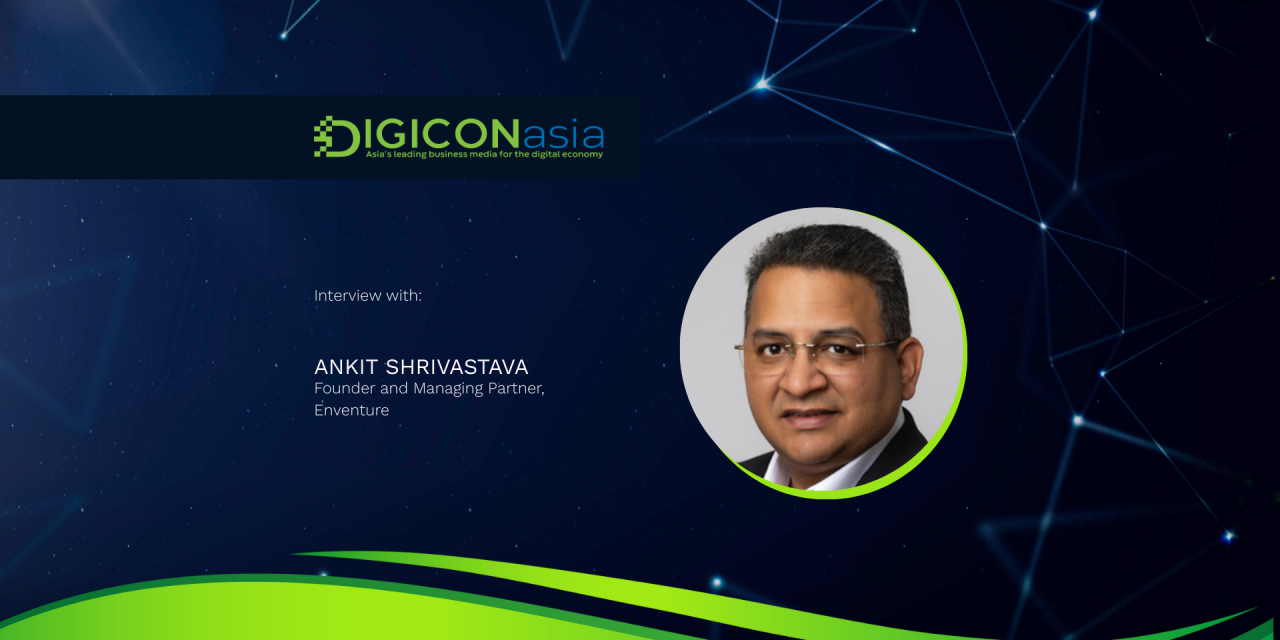
  • Overcoming these challenges requires more than just technology. It calls for policy alignment, a shared data infrastructure, clinician-led tool design, and the upskilling of the healthcare workforce to use AI responsibly. Only with these foundations in place can AI move from isolated use cases to becoming a core driver of equitable, patient-centric healthcare across India, according to Ankit Shrivastava, founder and Managing Partner, Enventure, in this Q&A with DigiconAsia.net.

DigiconAsia: What strategies, technologies, and governance frameworks are needed to overcome data fragmentation in Indian healthcare, and to enable equitable, interoperable AI?

Ankit Shrivastava (AS): India’s data fragmentation problem has become more than just a technical issue; it has spilled over into being an incentive problem as well.

Hospitals, labs, and insurers still see their datasets as competitive assets, not public infrastructure. Initiatives such as the Ayushman Bharat Digital Mission (ABDM) are crucial, but unless there is a tangible benefit for providers to share clean, structured data, uptake will be patchy.

The real breakthroughs will come when interoperability is tied to reimbursement rates, accreditation, or procurement eligibility, making participation a competitive advantage, not just a compliance task.

Technology can make sharing possible, but policy and economics make it probable. For AI, this shift is critical: without rich, longitudinal datasets that cross institutional boundaries, models will keep producing insights in silos. ABDM can be the technical backbone, but unless it is paired with aligned incentives and strict data quality standards, we will continue to have “interoperable” systems that in practice speak different dialects of the same language.

DigiconAsia: From explainable AI to generative outputs — how can we ensure that AI-driven recommendations in Indian healthcare are both trustworthy and ethically deployed?

AS: Trust in AI recommendations comes from relevance, not just transparency. Models must be trained on India-specific datasets, grounded in local protocols, and have to provide concise, context-aware explanations that integrate seamlessly into clinical workflows.

Generative AI tools can accelerate documentation, treatment plan drafting, and language translation — but without safeguards, risks of hallucinations/errors, over-reliance, and bias remain. Ethical deployment requires governance baked into workflows: mandatory human validation, audit trails for AI-generated content, and patient record transparency about where and how AI was used.

In short, AI should remain a “first word” assistant, never the “final word” authority.

DigiconAsia: How can predictive analytics and remote monitoring be adapted to India’s diverse patient populations to truly deliver proactive and equitable care?

AS: For predictive analytics to be truly proactive and equitable in India, the models must account for social determinants such as income, housing, and diet — not just medical data.

  • Upskilling programs should prioritize medical professionals, empowering them as informed co-pilots in AI-assisted care.
  • True collaboration means involving clinicians from the earliest design phases, ensuring tools are usable, context-appropriate, and clinically relevant.
  • Policymakers can accelerate this by tying funding, approvals, or incentives to demonstrable clinician participation in AI development.
  • Safety, scale, and effective deployment emerge when human expertise guides technological ambition.

DigiconAsia thanks Ankit for sharing his professional insights with our readers.

Share:

PreviousSurvey data shows varied digital remittance use and fee concerns among Asia Pacific respondents
NextAI over-reliance could diminish vital human capabilities and judgment skills: Op-ed

Related Posts

Singapore breaks through invoicing paper jam with PEPPOL

Singapore breaks through invoicing paper jam with PEPPOL

February 28, 2020

Algorithmic anarchy: When code goes rogue

Algorithmic anarchy: When code goes rogue

August 14, 2024

Clearing the air (and cloud) about on-premises ERP in digital transformation

Clearing the air (and cloud) about on-premises ERP in digital transformation

April 1, 2021

CX a game-changer for APAC businesses

CX a game-changer for APAC businesses

February 7, 2022

Leave a reply Cancel reply

You must be logged in to post a comment.

Awards Nomination Banner

gamification list

PARTICIPATE NOW

top placement

Whitepapers

  • Achieve Modernization Without the Complexity

    Achieve Modernization Without the Complexity

    Transforming IT infrastructure is crucial …Download Whitepaper
  • 5 Steps to Boost IT Infrastructure Reliability

    5 Steps to Boost IT Infrastructure Reliability

    In today's fast-evolving tech landscape, …Download Whitepaper
  • Simplify Payroll Setup for Your Small Business

    Simplify Payroll Setup for Your Small Business

    In our free guide, "How …Download Whitepaper
  • Overcoming the Challenges of Cost & Complexity in the Cloud-first Era.

    Overcoming the Challenges of Cost & Complexity in the Cloud-first Era.

    Download Whitepaper

Middle Placement

Case Studies

  • The 48-hour lifeline: How the IRC rewrote the rules for crisis care

    The 48-hour lifeline: How the IRC rewrote the rules for crisis care

    In a world where crises …Read More
  • CALB upgrades data platform to support analytics, security, and battery lifecycle tracking

    CALB upgrades data platform to support analytics, security, and battery lifecycle tracking

    Deploying a petabyte-scale data lake …Read More
  • How a Vietnamese D2C retailer built its own secure digital infrastructure

    How a Vietnamese D2C retailer built its own secure digital infrastructure

    Would your organization build your …Read More
  • Liverpool FC to deliver more personalized, real-time digital fan experiences with AI

    Liverpool FC to deliver more personalized, real-time digital fan experiences with AI

    The football club will deepen …Read More

Bottom Sidebar

Other News

  • Farmmi, Inc. Announces Launch of Proposed Public Offering

    June 28, 2026
    LISHUI, China, June 27, 2026 …Read More »
  • Name Change Completed for C Capital’s Swiss Listed Entity, Ticker Symbol CCAP Goes Live

    June 27, 2026
    HONG KONG, June 27, 2026 …Read More »
  • Korean Skincare Brand Meditherapy Tops Amazon U.S. Facial Serums, Breaking Into Beauty Best Sellers Top 20

    June 26, 2026
    NEW YORK, June 26, 2026 …Read More »
  • Fox ESS Shines at The Smarter E Europe 2026 with Full-Ecosystem Offerings and AI-Driven Booth Experience

    June 26, 2026
    MUNICH, June 26, 2026 /PRNewswire/ …Read More »
  • ZTE and GSMA Announce Co-location Between ZTE Global Summit & User Congress and GSMA M360 ASEAN at MWC26 Shanghai

    June 26, 2026
    ZTE and GSMA to co-locate …Read More »
  • Our Brands
  • CybersecAsia
  • MartechAsia
  • Home
  • About Us
  • Contact Us
  • Sitemap
  • Privacy & Cookies
  • Terms of Use
  • Advertising & Reprint Policy
  • Media Kit
  • Subscribe
  • Manage Subscriptions
  • Newsletter

Copyright © 2026 DigiconAsia All Rights Reserved.